DIN
CE
ISO
FEM
EAC

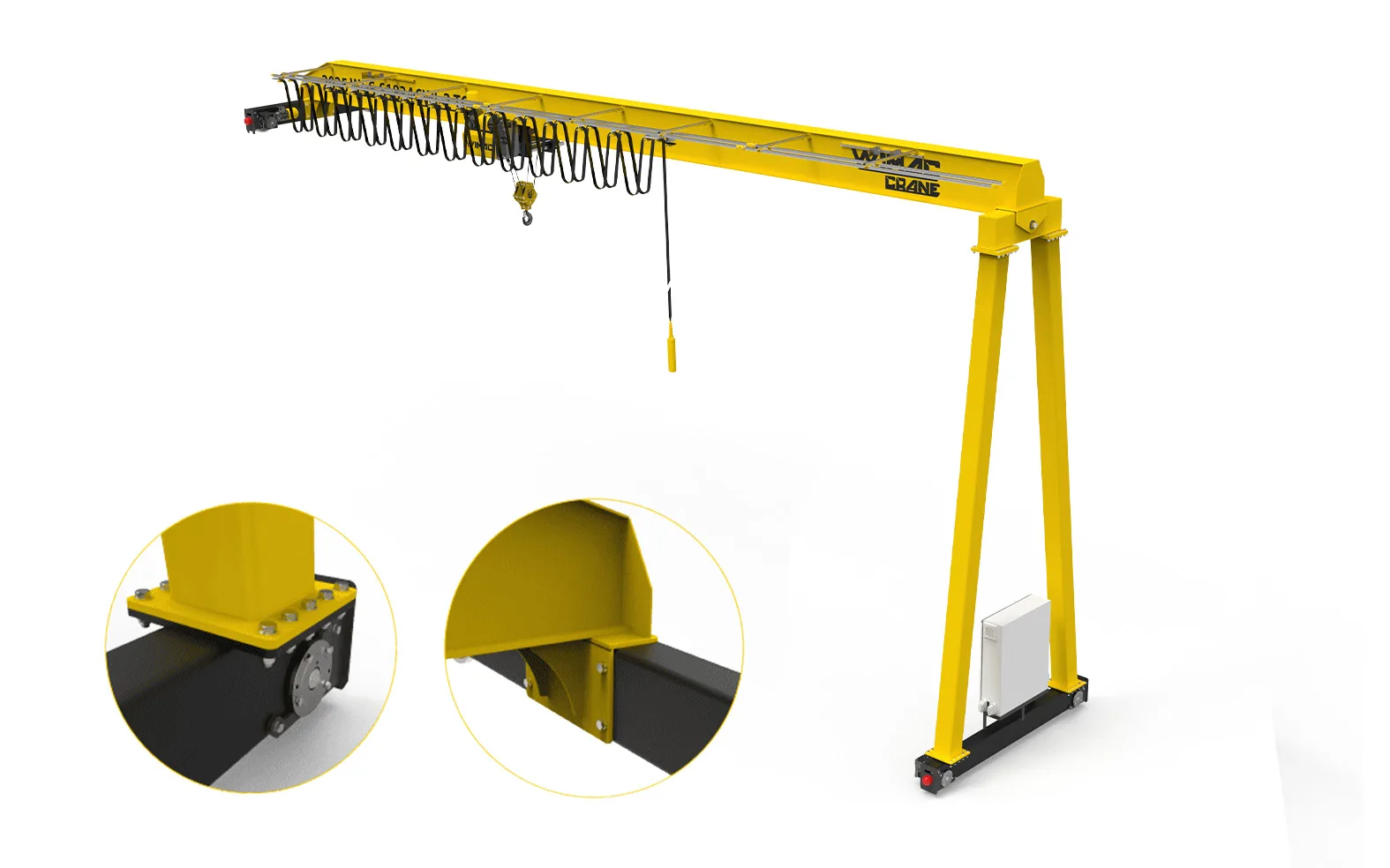
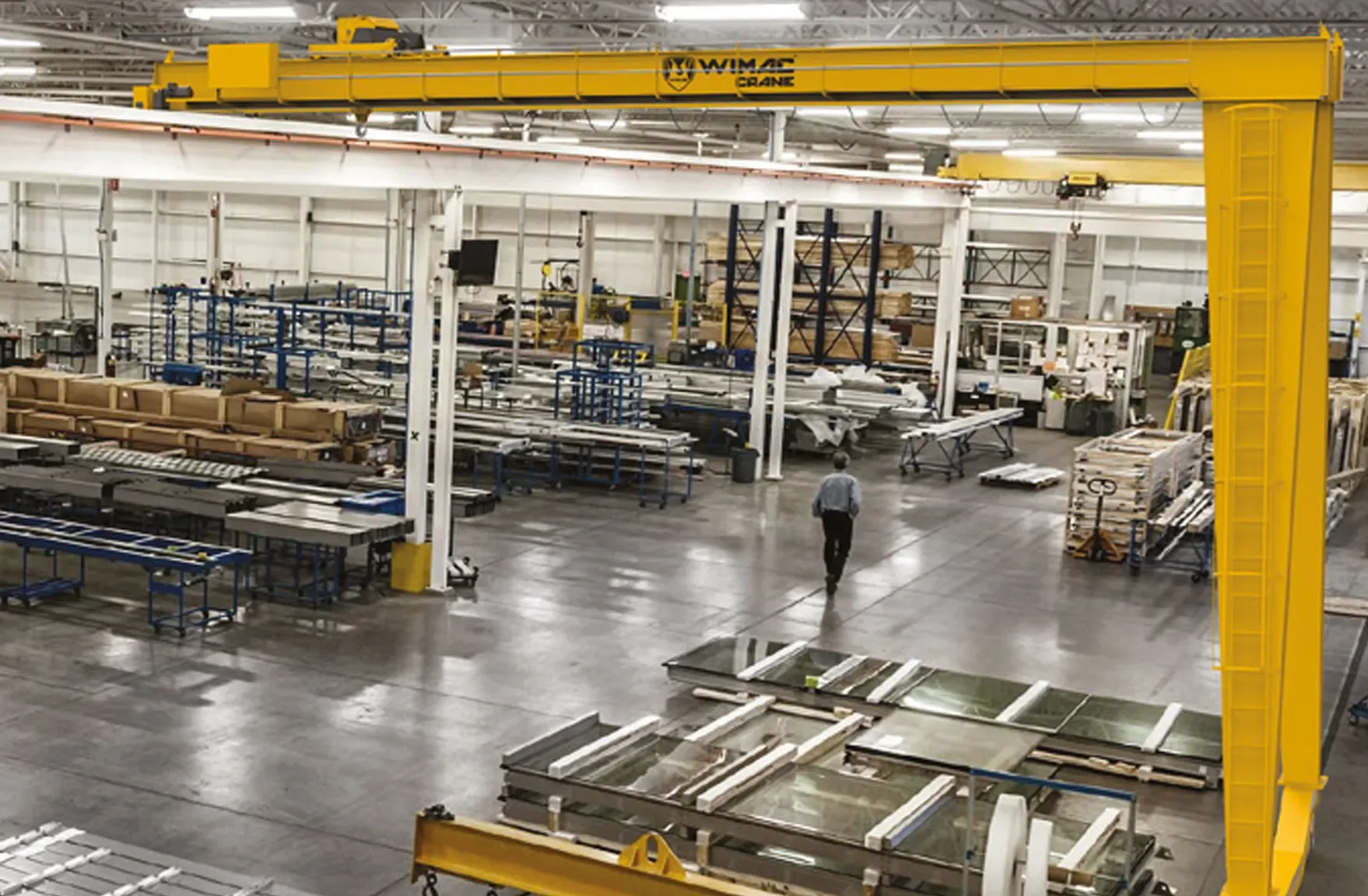
Sometimes described as a semi-portal crane, a semi-gantry crane blends two familiar machines. On one side its bridge runs like an overhead crane, on a rail fixed to the building; on the other side it behaves like a gantry crane, carried by a leg that travels on a rail at floor level. Wimac manufactures semi-gantry cranes in Konya, Turkey, and supplies them to factories, warehouses and workshops throughout Nigeria.
A semi-gantry can serve as the only crane in a bay, or it can be installed to work underneath an overhead crane that is already in place, adding a second hook without a second runway. The design was developed for exactly those situations where an overhead crane or a gantry crane would not do the job by itself. Because one side makes use of the existing building structure, the result is both ergonomic for the people working below and economical to build.
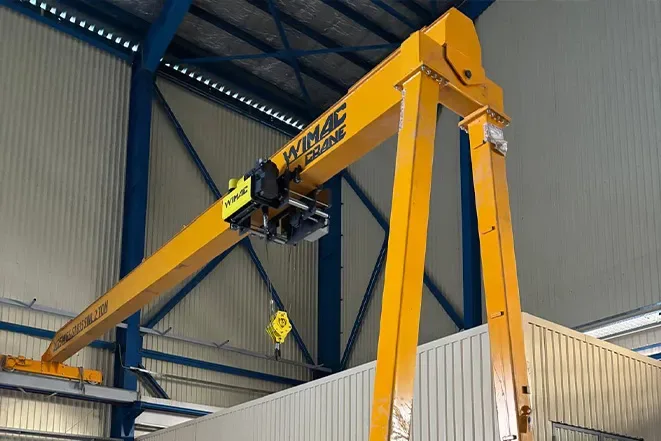
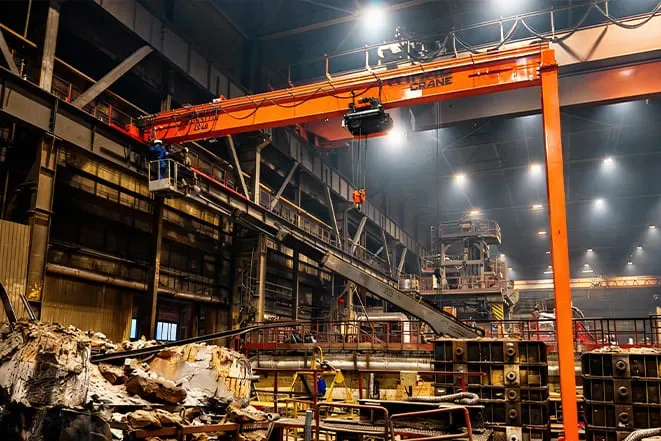
You can specify a semi-gantry crane with either a single girder or a double girder bridge. The choice depends mainly on the load to be lifted, the span and how intensively the crane will work: the specification range runs from 1.6 t up to 250 t, with spans of 6 to 30 m.
Every motion — hoisting, cross travel and long travel — is driven through a variable frequency drive, so the crane accelerates and brakes gently and the operator can place the load precisely, even at the top of the 10–80 m/min long-travel speed range.
The semi-gantry layout is most useful when only one side of a building can carry a crane runway, when a lean-to or open-sided bay is added to an existing hall, or when a lighter crane is needed to work beneath a main overhead crane. Typical users in Nigeria include manufacturing and FMCG plants in Lagos and Ogun State, fabrication and maintenance workshops serving the oil and gas sector around Port Harcourt and Warri, steel and cement works, and warehousing and logistics sites.
To prepare a quotation, our engineers need the required capacity, the span between the wall rail and the floor rail, the lifting height, the runway length, how heavily the crane will be used, details of the building column or wall that will carry the elevated rail, and the power supply on site. With that information, Wimac can design the crane and quote for its supply and installation in Nigeria.
Variable frequency drives on every motion for soft starts, smooth stops and accurate positioning.
Engineered and produced in line with international crane safety standards.
Useful answers for Nigerian buyers comparing semi-gantry, overhead and full gantry cranes.