DIN
CE
ISO
FEM
EAC
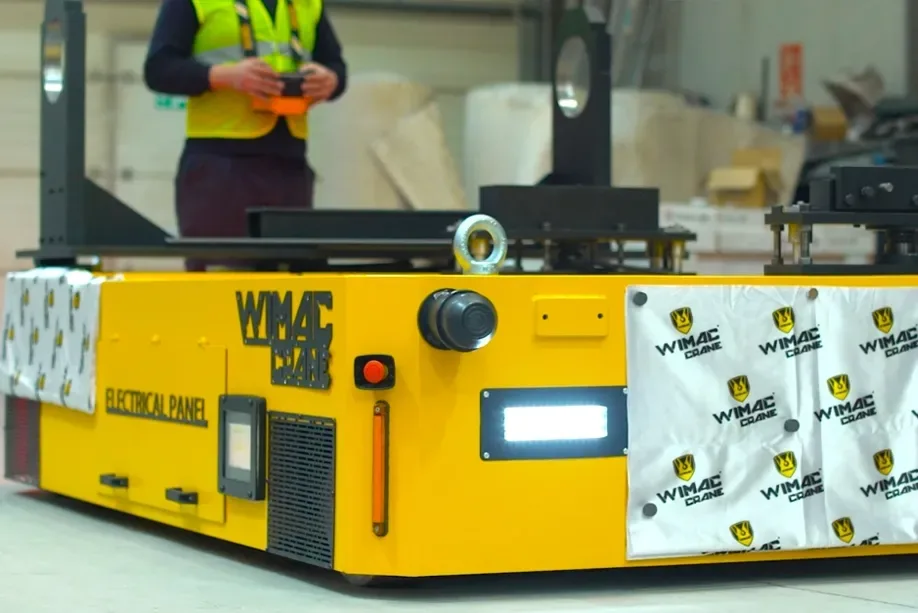
A transfer cart takes over where a crane or forklift runs out of reach: it carries heavy or bulky work along the floor from one production line, assembly station or storage zone to the next. Wimac designs every cart around the job — the load it will carry, the route it will follow and the environment it will work in — so capacities range from light loads to the heaviest industrial pieces, and the cart can run on rails or move freely without a track. For factories in Lagos, Ogun State, Port Harcourt and elsewhere in Nigeria, that means safer, more predictable movement of materials and fewer delays waiting for overhead lifting equipment.
| Capacity | 5 – 250 tons |
| Speed | Up to 20 m/min |
| Steering | Front Wheel / All Wheels Steering |
| Wheel Type | Rubber / Polyurethane |
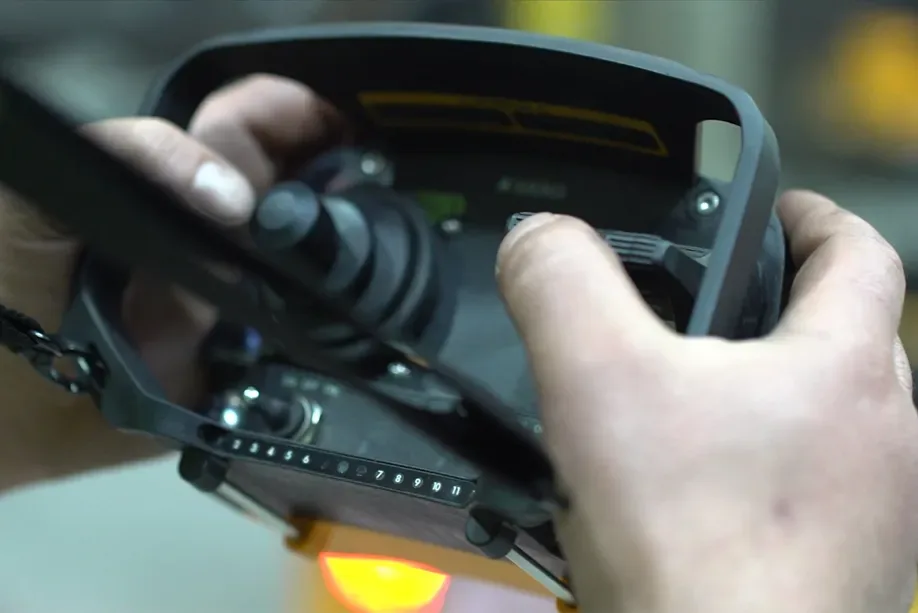
| Control | Remote Control / Autonomous |
| Power Source | Battery |
| Motors | DC High Efficiency Motors |
| Loading Table | Customizable |
| Security | Laser and ultrasonic sensors, bumpers |
| Dimensions | Customizable |
Front / Rear · Front Axle · Axle Steering
On an FTC the steering is done by the front axle, which lets the cart follow both straight runs and curves through the plant. Operators can choose front / rear travel, front axle steering, or axle steering when a smaller turning circle is needed.

Front / Rear · 90° / Crab · Diagonal Crab · All Wheels · 360° / Carousel
Where space is tight, the MTC is the answer. Each wheel steers on its own, so the cart can drive forwards and backwards, move sideways in 90° crab mode, travel diagonally in diagonal crab mode, steer on all wheels, or spin a full 360° on the spot in carousel mode.


| Capacity | 5 – 250 tons |
| Speed | Up to 40 m/min |
| Steering | All Wheels Steering |
| Wheel Type | Steel / Casting |
| Control | Remote Control / Autonomous |
| Power Source | Spring Drum, Bus-Bar, Cable Carrier, Battery |
| Motors | AC / DC High Efficiency Motors |
| Loading Table | Customizable |
| Security | Laser and ultrasonic sensors, bumpers |
| Dimensions | Customizable |
For battery-driven carts, whether rail-guided or free-moving, Wimac can fit LiFePO4 (Lithium Iron Phosphate) battery packs. Against traditional lead-acid batteries they use energy more efficiently, last considerably longer, recharge faster and need far less upkeep — a strong fit for busy, multi-shift industrial work.
Each pack is supervised by a Battery Management System (BMS): an electronic control circuit that watches over the rechargeable cells and keeps them operating safely and efficiently. Its five main jobs are:
Monitoring — tracks the voltage, current and temperature of every cell in real time.
Protection — guards the pack against overcharging, deep discharge, short circuits and overheating.
State Estimation — works out the state of charge (SoC) and state of health (SoH) of the battery.
Cell Balancing — equalises the energy held in each cell so the pack performs evenly and lasts longer.
Thermal Control — keeps battery temperature within its safe working window.
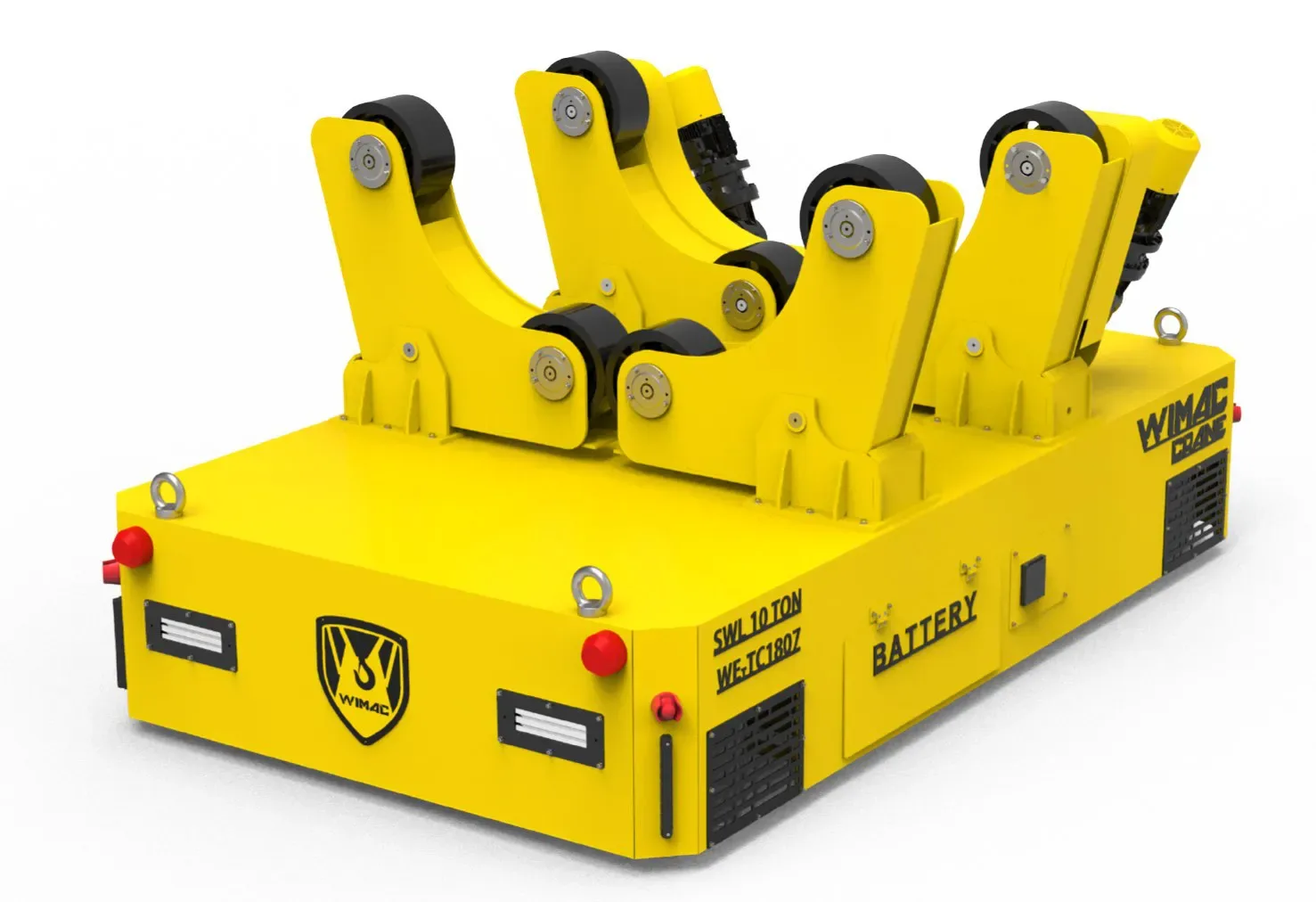
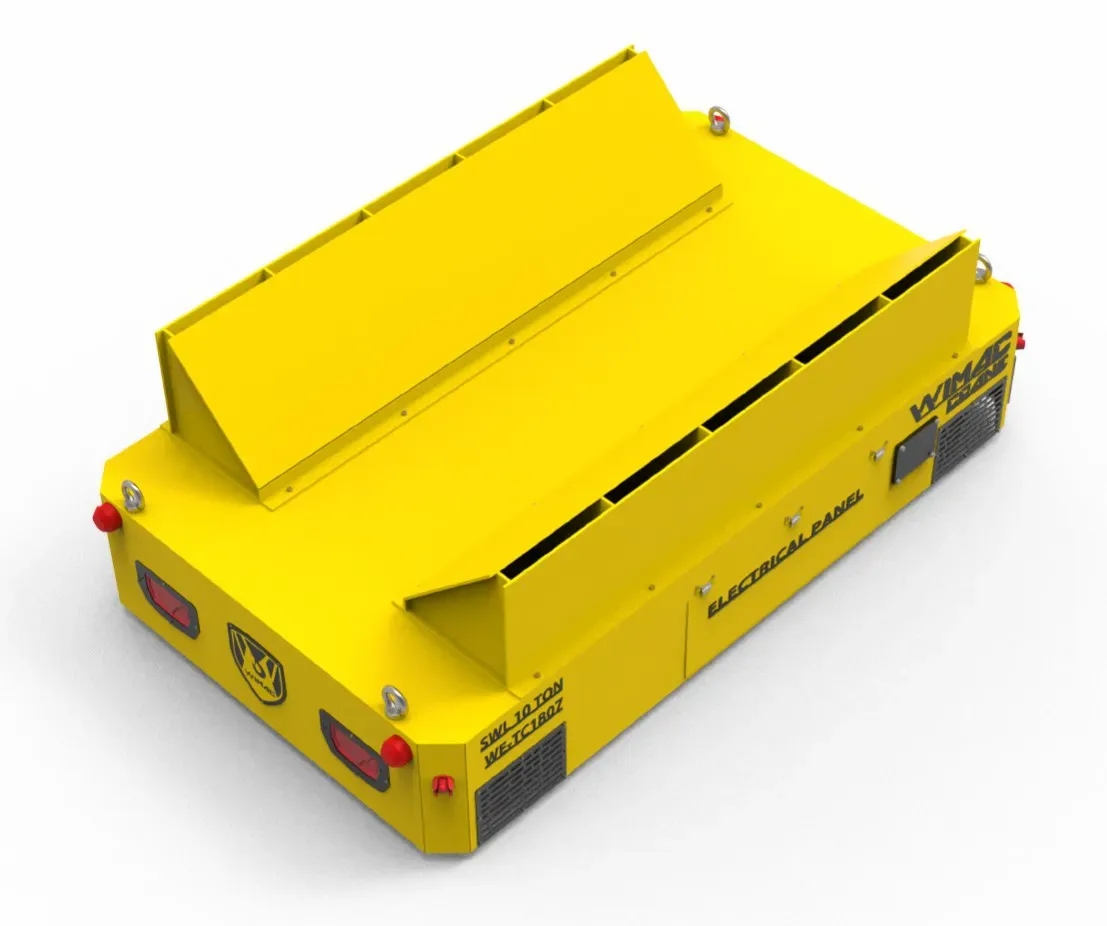
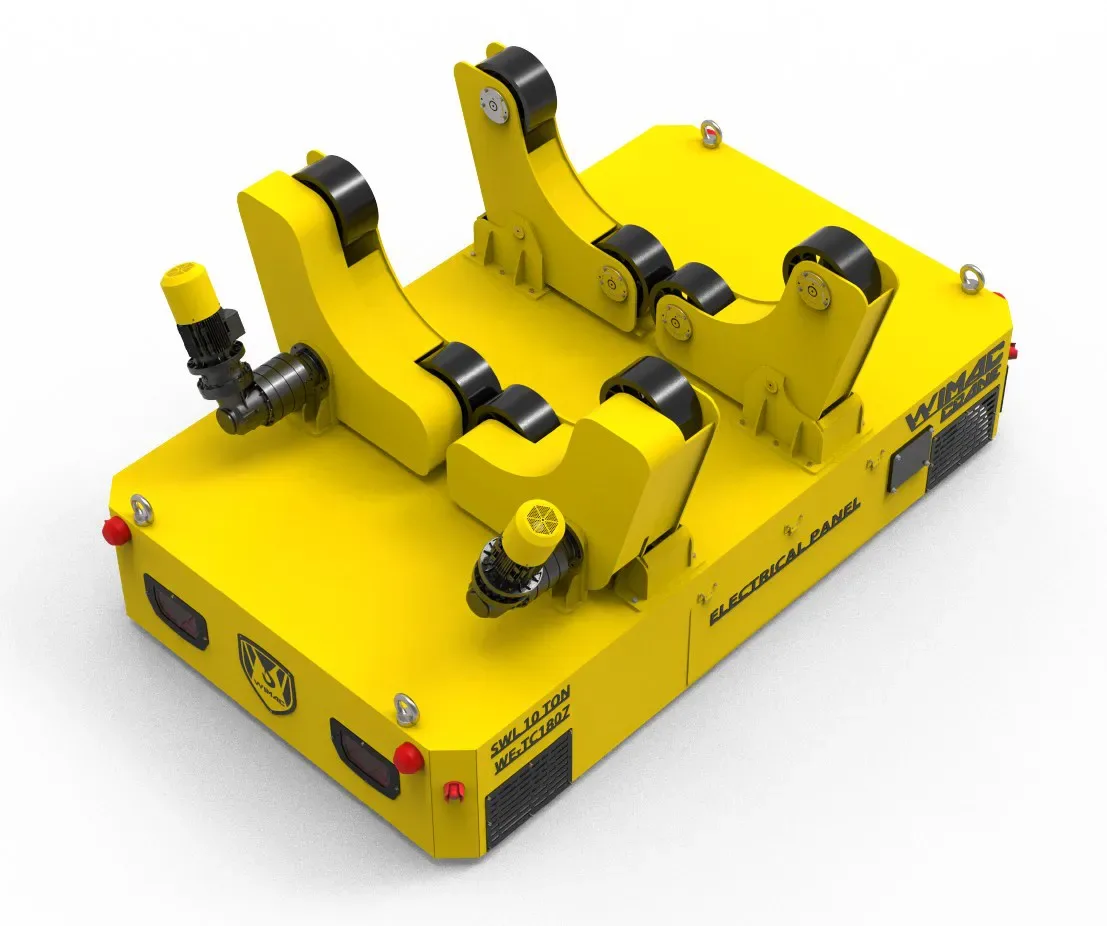
The top of a Wimac cart is designed for the load it will carry. Options built to order include V-supports that cradle pipes and shafts, motorised rotator supports that turn cylindrical work, tilting frames and other bespoke load handling equipment.
Transfer carts suit any Nigerian facility that moves heavy items between bays or buildings on a regular basis. Common uses include:
What to include in a quote request: maximum load and its dimensions, travel route and distance (with any curves or crossings), floor or rail condition, preferred power source, required speed, and the type of load table you need. Wimac engineers in Turkey use these details to specify the cart and prepare an offer for delivery to Nigeria.