


Overhead Crane End Carriages for Nigerian Plants
An overhead crane end carriage (also called an end truck) is the welded steel assembly, fabricated from plate and profiles, that carries the crane bridge along its runway beams. Each one is fitted with machined wheel blocks, forged and heat-treated steel wheels with hardened treads, and sealed bearings that need no maintenance, giving a long working life. Wimac manufactures them in Konya, Turkey and supplies them to crane owners in Nigeria, whether mounted on a new bridge or delivered as replacement end trucks and wheel blocks.
Bridge travel is driven by squirrel-cage asynchronous motors designed for frequency inverter control, so the crane starts and stops smoothly. Buffers and sensors on every end truck guard against over-travel.
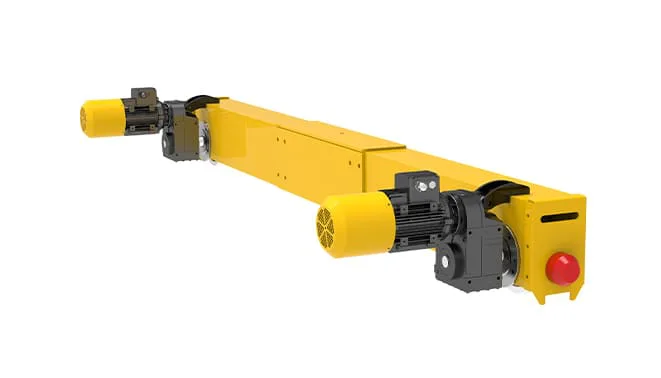
Single Girder End Carriage
For standard single girder overhead cranes
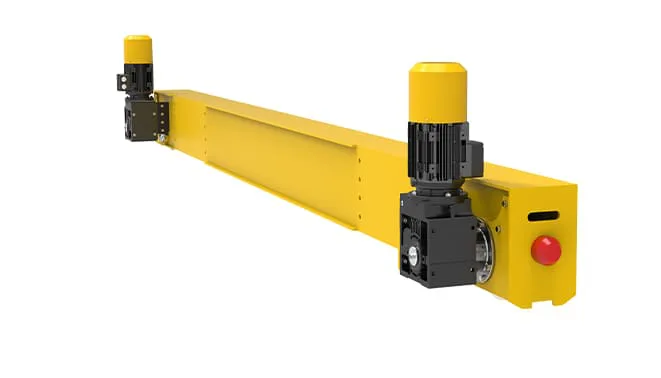
Double Girder End Carriage
For standard double girder overhead cranes
Construction and Drive Features
Configuration Options
- Single Girder End Trucks – suited to under-running hoist applications
- Double Girder End Trucks – suited to top-running crab type cranes
- Choice of 2, 4 or 8 wheel layouts
- Non-standard wheel gauges made to order
Underslung End Carriage for Low-Roof Buildings
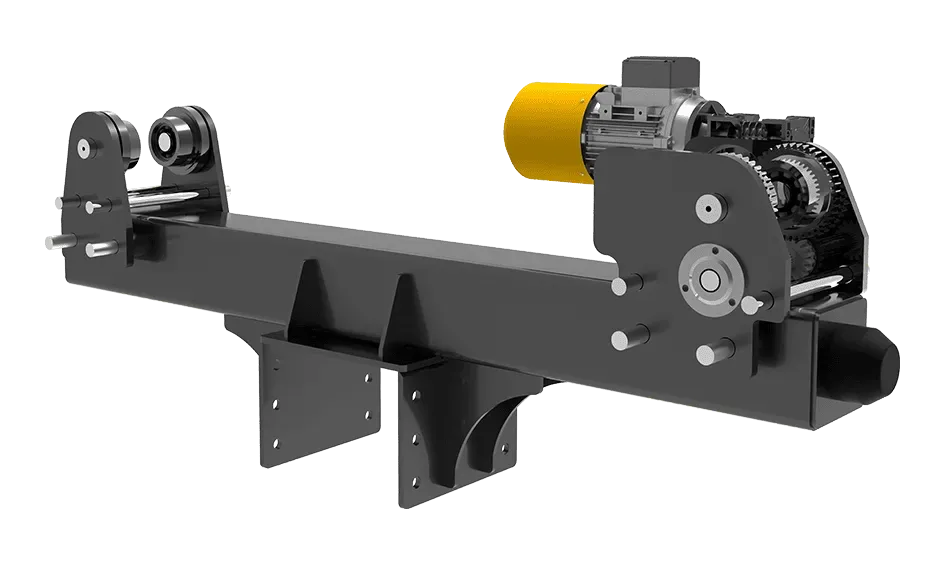
Underslung end trucks (under-running end carriages) are suspended beneath the runway beam. That makes them the obvious choice when a building is short on height, or when its structure cannot take a top-running crane, because they squeeze the most lifting height out of the space available.
With this arrangement the crane runs on the lower flange of standard I-beams or purpose-made runway tracks, so no crane rails have to be laid on top of the runway beams. The result is a cheaper installation and less demanding requirements on the building structure.
Why Choose Underslung
Where It Is Used
- Workshops and bays with low roofs
- Crane retrofits in existing buildings
- Light and medium duty lifting
- Production halls and assembly lines
Heavy Duty Overhead End Carriage for Process Cranes
On heavy and heavy-duty overhead process cranes, the end carriage is a load-critical structure. Under severe operating conditions it has to pass vertical wheel loads, horizontal drive forces and dynamic impact loads from the bridge girder into the runway. Wimac engineers it for high wheel loads, long travel distances, frequent start–stop cycles and continuous process duty, in line with FEM duty classes up to FEM 4m–5m (M6, M7, M8) and ISO 4301-1 crane classifications up to A7–A8. The outcome is dependable performance, a stable structure and a long service life in the toughest industrial settings.
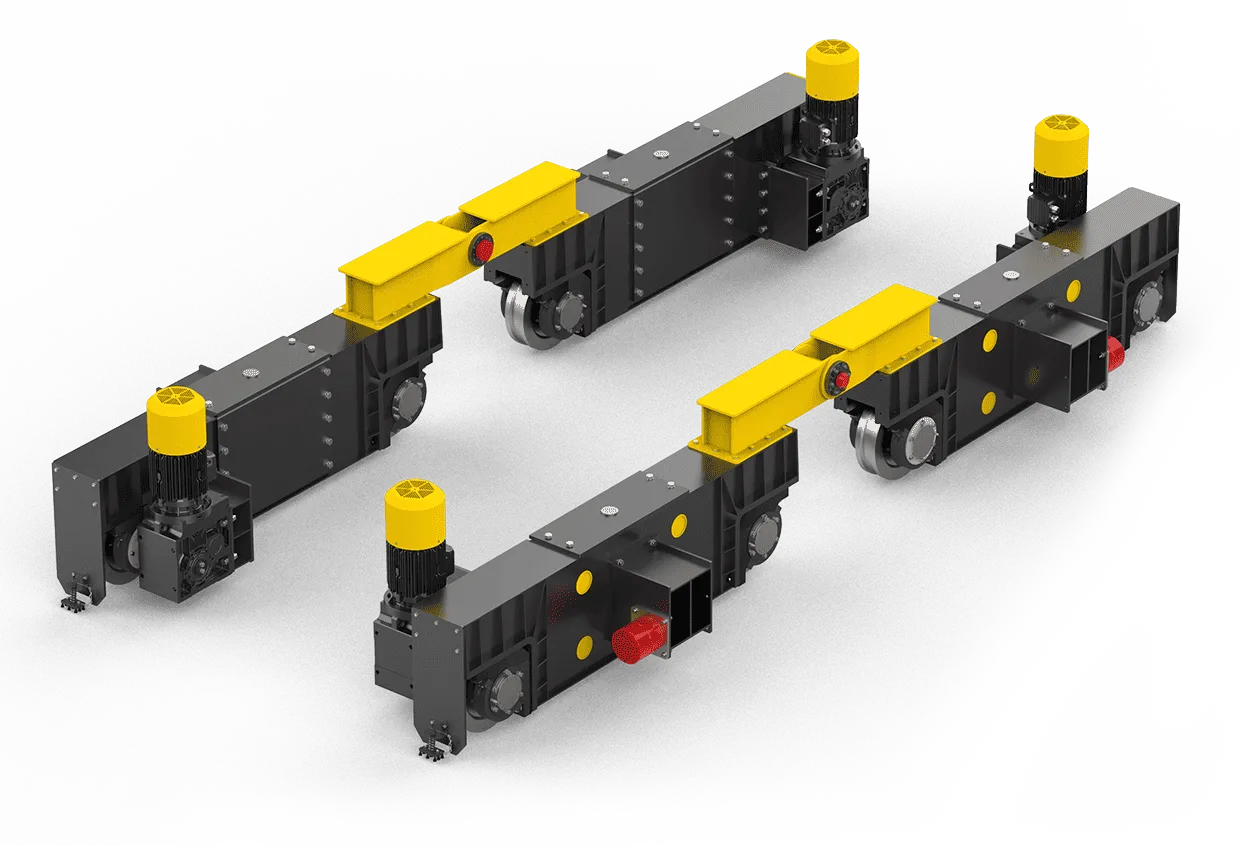
Wimac process wheels are produced from quenched and tempered 42CrMo4 steel for high strength and durability. Where performance demands are especially high, the wheels can be deep-hardened to cut tread wear and lengthen service life.
Design, calculation and manufacturing all follow international standards. This heavy duty version is intended for steel mills, foundries and other harsh industrial operations where a breakdown is not an option — including the steel rolling mills and heavy plants found in Nigeria.
Standards and Materials
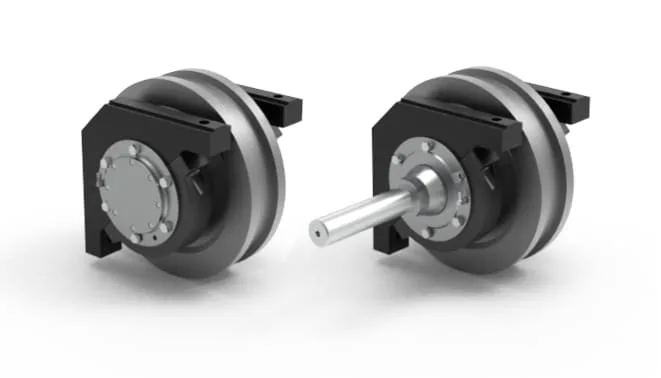
Driven Wheel Block
Supplied as motor-driven and idler assemblies
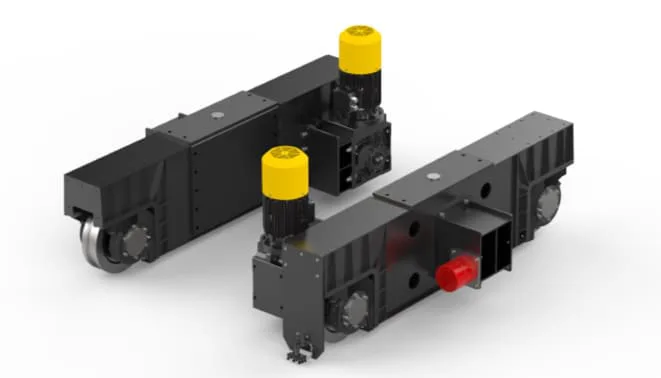
End Trucks
A motor-gearbox is fitted to every end truck
Buffer Options
Where It Is Used
- Steel mills, rolling mills and foundries
- High-cycle process cranes
- Heavy manufacturing plants
- Operations running continuously, 24/7
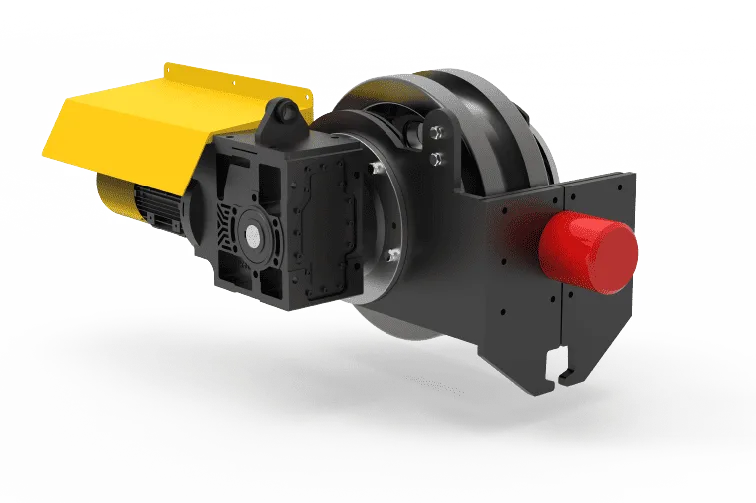
Standard Gantry End Carriage for Outdoor Cranes
Wimac's Standard Gantry End Carriage is built for gantry cranes working outdoors in duty class M4 - M5 / 1Am - 2m. It combines driving wheel blocks with idler wheel blocks, spreading the load evenly and keeping travel smooth — a sound basis for yard and stockyard gantries anywhere from Lagos to Port Harcourt.
The wheels are made from quenched and tempered 42CrMo4 steel for strength and a long service life, with deep-hardened treads available to limit wear on harder-working cranes. Wheel, bearing and assembly design all conform to DIN 15070, DIN 15071 and DIN 15090.
Main Components
Standard Gantry End Carriage Data
| Item | Value |
|---|---|
| Duty Class | M4 - M5 / 1Am - 2m |
| Wheel Material | 42CrMo4 Quenched & Tempered |
| Wheel Design Standard | DIN 15070 |
| Bearing Design Standard | DIN 15071 |
| Roller Bearing Standard | DIN 15090 |
| Tread Hardening | Optional deep-hardening available |
| Motor Type | Squirrel-cage asynchronous |
| VFD Compatible | Yes |
Where It Is Used
- Gantry cranes working in the open
- Logistics centres and container yards
- Port terminals and shipyards
- Handling of construction materials
Very Heavy Duty Gantry End Carriage for Ports and Mills
Rated for duty class M7 / 4m, the Very Heavy Duty Gantry End Carriage is reinforced to cope with larger loads and harsher working conditions. Several driving wheel blocks are used together to give the greatest possible traction and load-carrying capacity, which is what busy port and logistics yards such as those around Apapa, Tin Can Island and Onne demand from a gantry.
Its wheels are produced from quenched and tempered 42CrMo4 steel, giving high strength and long life, and deep-hardened treads can be specified to reduce wear where duty is heavier still. Every wheel, bearing and assembly is designed to DIN 15070, DIN 15071 and DIN 15090.
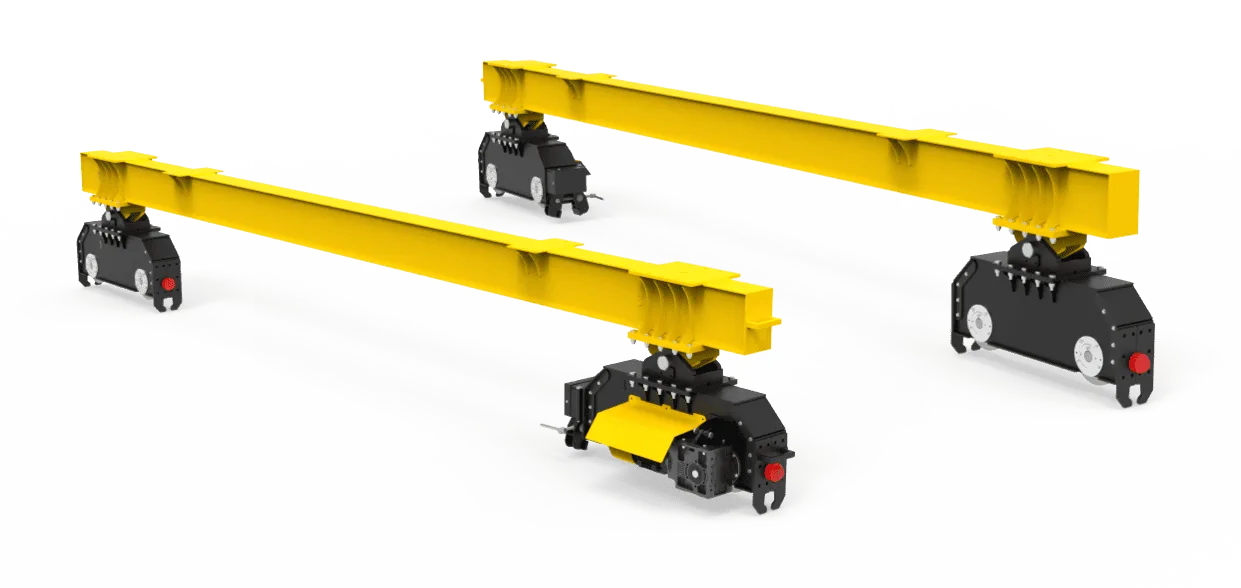
Main Components
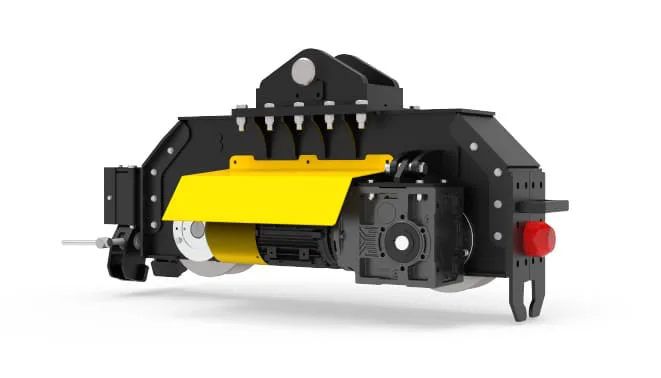
Heavy Duty End Carriage
Meets ISO / FEM M6/3m
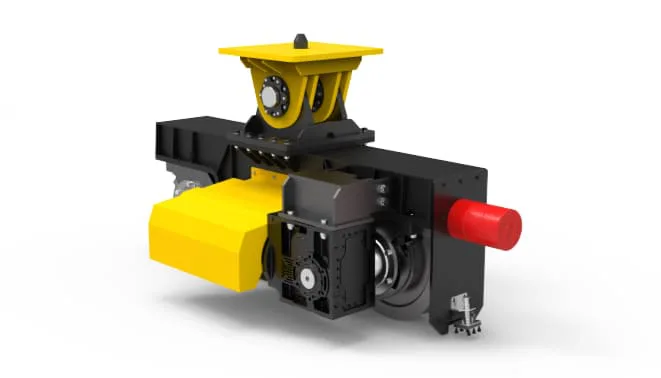
Very Heavy Duty End Carriage
Meets ISO / FEM M7-M8/4m
Very Heavy Duty Gantry End Carriage Data
| Item | Value |
|---|---|
| Duty Class | M7 / 4m (Very Heavy Duty) |
| Wheel Material | 42CrMo4 Quenched & Tempered |
| Tread Treatment | Deep-hardened for extreme wear resistance |
| Wheel Design Standard | DIN 15070 |
| Bearing Design Standard | DIN 15071 |
| Roller Bearing Standard | DIN 15090 |
| Configuration | Multi-wheel driven bogie |
| VFD Compatible | Yes - Variable speed control |
Where It Is Used
- Container cranes at ports (RTG, RMG)
- Gantry cranes in shipyards
- Outdoor cranes at steel mills
- Heavy industrial materials handling
- High-load operations running 24/7
Crane End Carriages for Industry in Nigeria
The end carriages carry the entire crane, so they take the hardest wear on a busy site. Wimac's range covers the end trucks Nigerian operators most often need: overhead crane end carriages for manufacturing plants, FMCG factories and warehouses in Lagos and Ogun State; heavy duty versions for process cranes in steel rolling mills and cement plants; and gantry end carriages for outdoor cranes at ports, logistics yards and fabrication yards serving the oil and gas sector.
Every type uses squirrel-cage asynchronous motors that are VFD compatible, giving soft starts and stops that are easier on wheels, rails and structure where cranes start and stop many times a shift. Complete end carriages, end trucks and wheel blocks can all be ordered, for new cranes or as replacements on cranes already in service.
Crane End Carriage FAQs for Nigerian Buyers
Which crane end carriage types does Wimac supply to Nigeria?
Five types: overhead end carriages for single and double girder cranes, underslung end carriages, heavy duty overhead end carriages for process cranes, standard gantry end carriages and very heavy duty gantry end carriages.
What material are Wimac crane wheels made from?
Process and gantry wheels are made from quenched and tempered 42CrMo4 steel. Where tread wear is a concern, the wheels can be deep-hardened.
Which standards are the wheels and bearings designed to?
Wheel calculations follow DIN 15070, bearing calculations follow DIN 15071, and roller bearings are to DIN 15090.
Can I order end trucks or wheel blocks as spare parts?
Yes. End carriages are supplied either fitted to a new crane bridge or as replacement end trucks and wheel blocks for cranes already in service.
What should I send when requesting an end carriage quotation?
Send the crane type and capacity, span, duty class, runway rail or beam details, the wheel configuration (2, 4 or 8 wheels), whether a frequency inverter drive is needed and where your site is in Nigeria.