DIN
CE
ISO
FEM
EAC

Cement is one of Nigeria's biggest manufacturing industries, with integrated plants and grinding stations spread across states such as Ogun, Kogi, Edo, Sokoto and Cross River. Every one of those sites depends on cranes — not to move cement itself, which travels by conveyor, elevator and truck, but to install, maintain and repair the very heavy machinery that keeps the line running. When a mill gearbox, crusher rotor or kiln drive component has to come out, the crane decides how quickly the plant gets back into production.
Wimac designs and manufactures overhead cranes, gantry cranes, jib cranes, hoists and complete process cranes at its factory in Konya, Turkey. For cement producers, grinding plants and EPC contractors in Nigeria, that means one manufacturer can engineer every crane on the site to its real load case — and support it after installation.
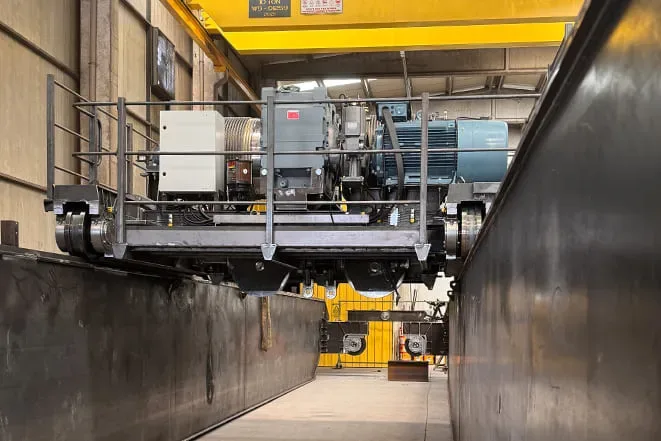
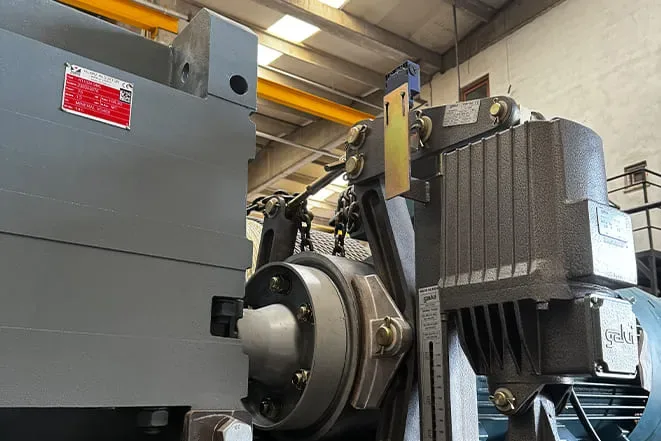
A cement works is one of the harshest places a crane can operate: fine abrasive dust everywhere, radiant heat around the kiln and cooler, outdoor exposure in yards and long periods of standby followed by intensive shutdown campaigns. The sections below explain where cranes are used in a cement plant, how to protect them from dust and heat, and how to choose the right duty class for each one.
IP55 or IP67 panel enclosures and optional sealed, air-conditioned cabins keep cement dust away from electrics and operators.
From occasional maintenance lifts to all-shift handling, each crane is rated in the FEM / ISO class its workload actually needs.
From the quarry crusher to the bagging line, each area of a cement works has its own lifting job — and its own best crane type.
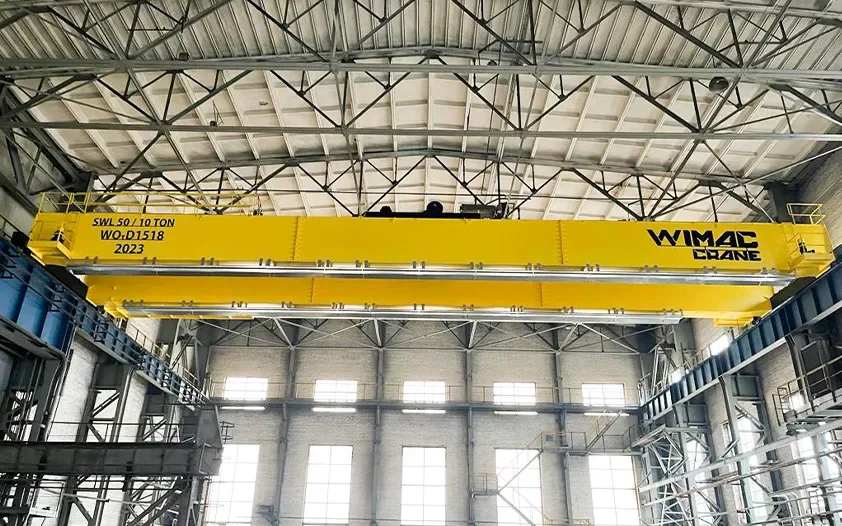
A double girder overhead crane over the crusher lets crews lift out rotors, hammers, liners and drive motors for replacement. Lifts are heavy and infrequent, so hook height and coverage matter more than speed.
Mill buildings need a crane that can reach gearboxes, main motors, separators, rollers and liner plates. This is classic maintenance duty: the crane may stand idle for weeks, then work hard through a planned shutdown.
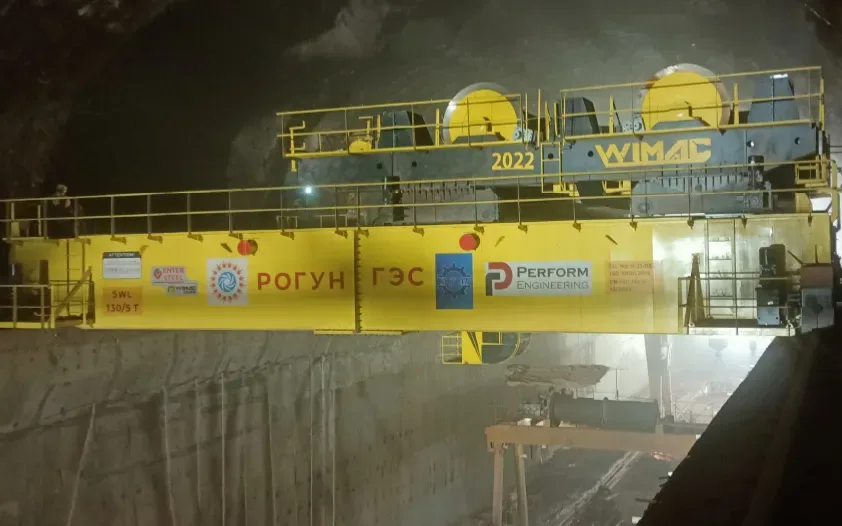
A kiln maintenance crane serves the drive station, support components and cooler equipment during shutdowns. Radiant heat and dust make a process crane specification, with protected electrics, the safer choice.
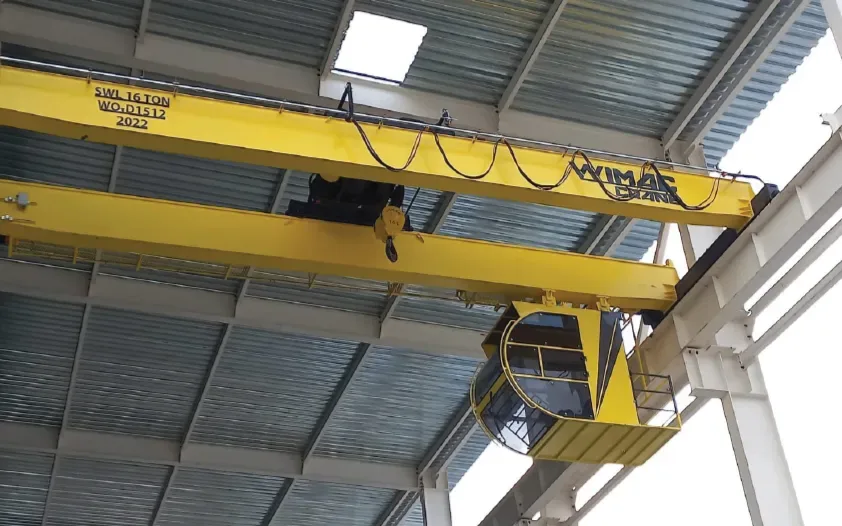
Single girder overhead cranes and monorail hoists handle packer spares, pallets and consumables. Here the crane cycles more often, so duty class takes priority over raw capacity.
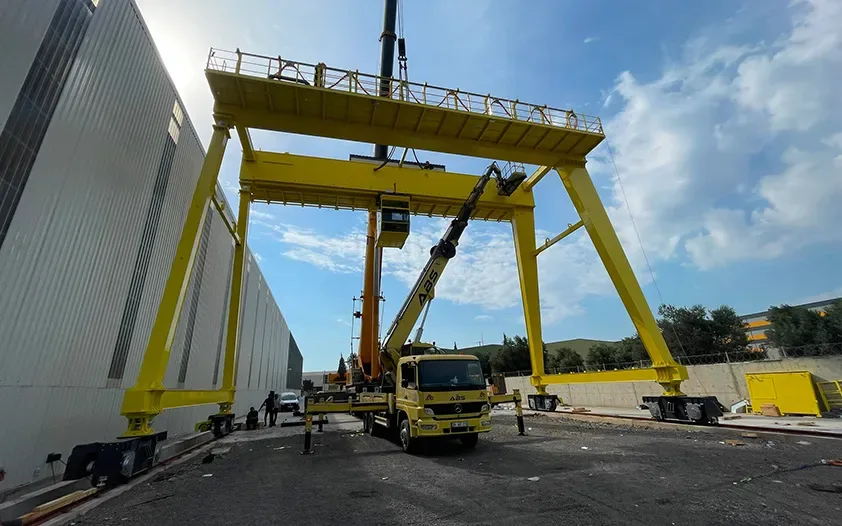
Gantry cranes run on ground rails and need no building columns, which suits open stores for spare mill parts, liners and steel, and areas where trucks are loaded under the hook.
Jib cranes from 0.5 t to 10 t serve mechanical and electrical workshops, so small repetitive lifts do not tie up the main overhead crane.
Plan hook coverage early. In a mill or kiln building the most common mistake is a crane that has enough capacity but cannot reach the part. Share equipment layouts with our engineers so the span, hook approach and lifting height cover every component that will need to be removed during the plant's life.
Use the right hoist. Wimac wire rope hoists and trolleys are offered for double girder cranes, monorails and heavy process duty. For the heaviest kiln and mill components, heavy duty process hoists of up to 500 t are designed for the most severe duty classes.
Cement dust is fine, abrasive and finds its way into every gap. The crane has to be specified for it from the start.
Protected electrics. Wimac crane electrical panels are built in IP55 or IP67 enclosures that protect contactors, inverters and PLCs against dust and moisture. The panels are designed for operating temperatures from -40°C to +70°C, and an integrated cooling system can be added for hotter locations such as the kiln and cooler area.
Operator comfort and visibility. Where a crane is driven from a cab, an air-conditioned operator cabin built to EN 13557 and ISO 8566 gives sealed glazing and climate control — in Nigerian heat and cement dust, far more than a comfort extra. Many cement plant cranes are instead run from a wired pendant or a wireless radio remote, which lets the operator stand where the load is clearly visible.
Smooth, precise motion. Process cranes use frequency inverter (VFD) control on long travel, cross travel and hoisting, giving soft starts and stops and accurate positioning of heavy, high-value components such as mill gearboxes. Smooth acceleration also reduces load swing and wear on mechanical parts.
Maintenance from day one. Every Wimac crane is handed over with maintenance manuals and a routine maintenance schedule. In dusty plants, following that schedule for brakes, wire ropes, contactors and motors is the simplest way to catch wear before it causes downtime. Our crane maintenance and repair team supports inspection, repair and spare parts for Wimac cranes in Nigeria.
Two cranes with the same capacity can need very different designs, depending on how often and how heavily they work.
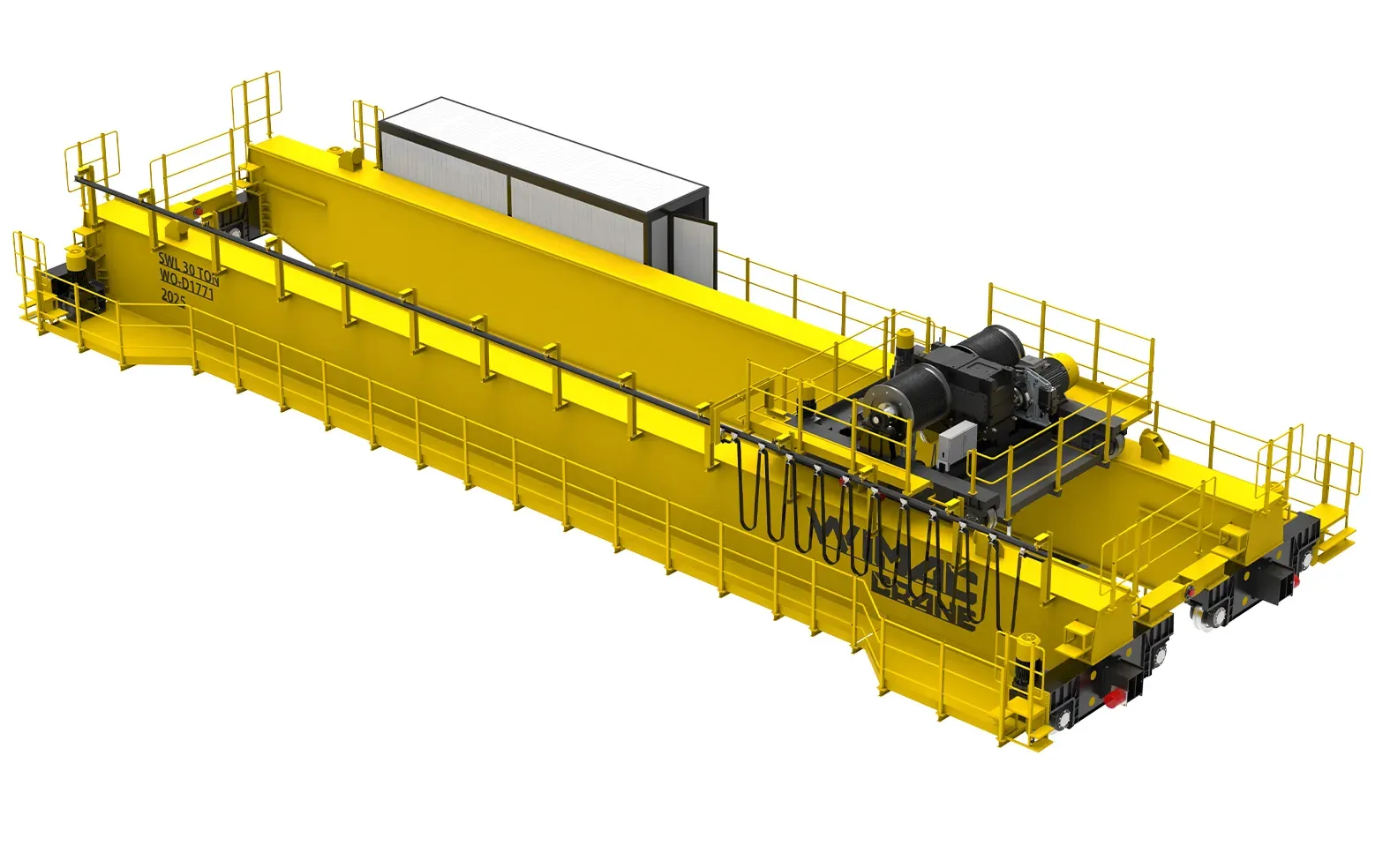
Mill, crusher and kiln cranes lift rarely but close to their rated load. Capacity, hook height and coverage are sized around the heaviest component, while the duty class can often sit in the lower-to-middle range of the double girder span of FEM 2m to 4m (ISO M4 to M8).
Cranes that work every shift — in packing plants, warehouses or continuous process duty — need a higher class. Wimac process cranes are rated FEM 3m to 5m (ISO M6 to M8) for intensive, round-the-clock service.
The duty class is set by the load spectrum (how close to full capacity the crane usually lifts) and the number of operating hours or cycles. Under-rating a production crane shortens the life of the hoist, gearboxes and wheels; over-rating a maintenance crane adds cost and weight without benefit. Tell us honestly how each crane will be used and our engineers will select the class to FEM and ISO norms.
For a building with restricted headroom, a low-ceiling underslung crane can recover valuable hook height. For hazardous zones elsewhere on site — for example around fuel handling — the double girder overhead crane can also be produced as an explosion-proof crane.
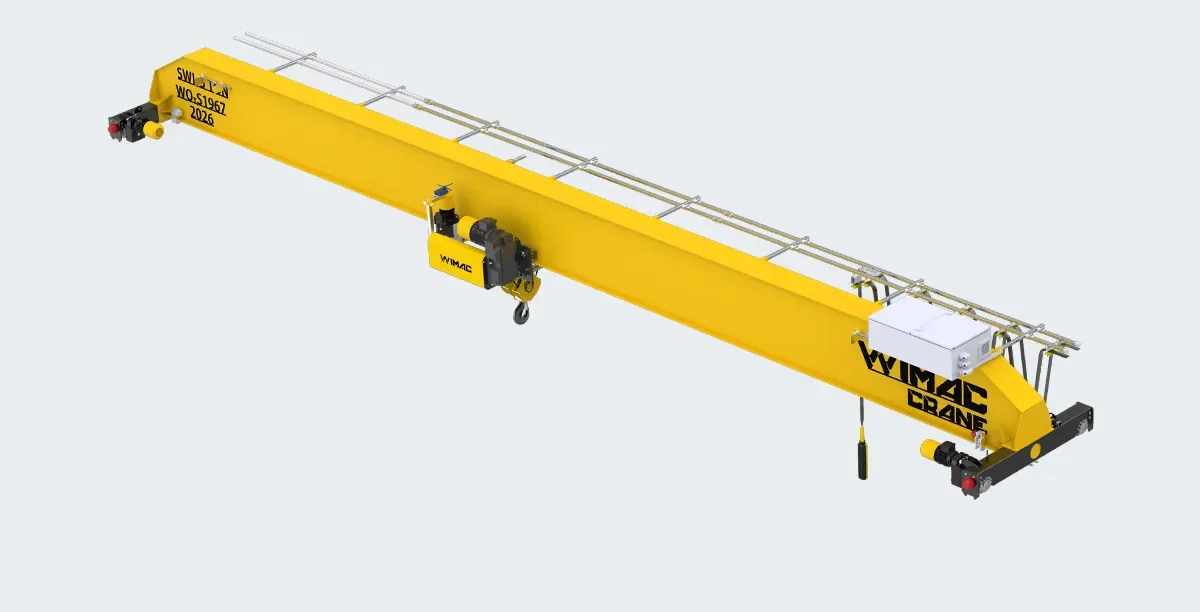
The same engineering serves other heavy and fast-moving industries across Lagos, Ogun State, Port Harcourt, Abuja, Kano and beyond.
Billet, coil and roll-change handling with high-temperature, continuous-duty steel mill cranes rated FEM 3m to 5m / ISO M6 to M8.
Light and medium duty single girder cranes and monorail cranes from 1 t to 32 t for production lines, mould changes and line maintenance.
Overhead cranes for loading bays and stores, with low-ceiling designs for buildings where every metre of hook height counts.
Gantry cranes for outdoor yards and jib cranes for individual workstations, alongside the main bay crane.
The more complete the brief, the faster our engineers can propose a crane that fits your building and your process.
Wimac will then prepare a crane specification and quotation, and can include spare parts and maintenance support in the same proposal.
Answers to the questions Nigerian cement producers, factory owners and EPC contractors ask most often.