


Standard Monorail Hoists Supplied Across Nigeria
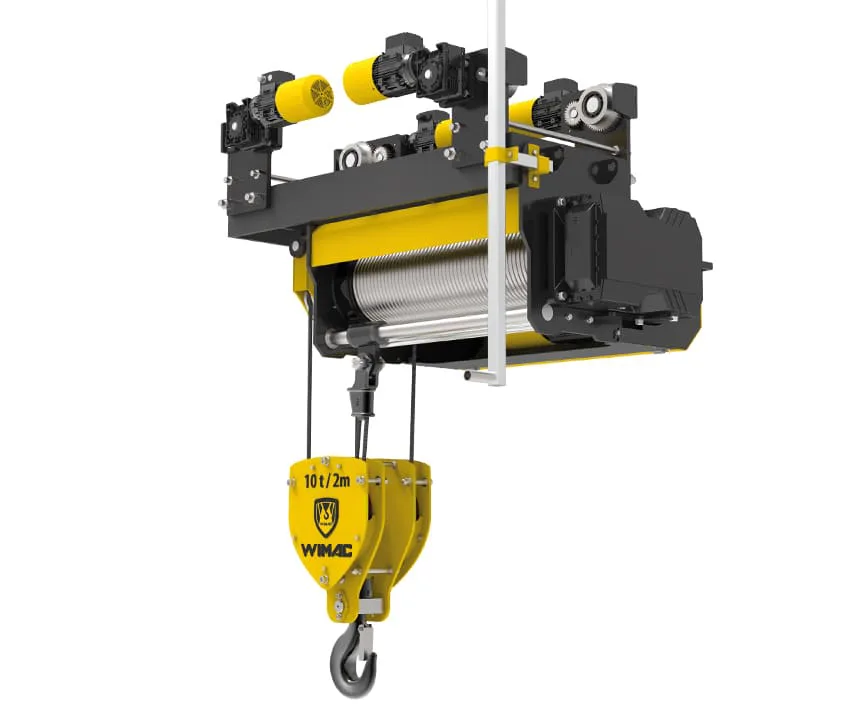
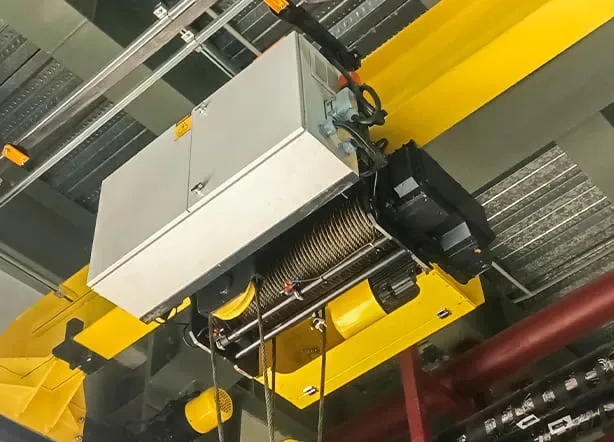
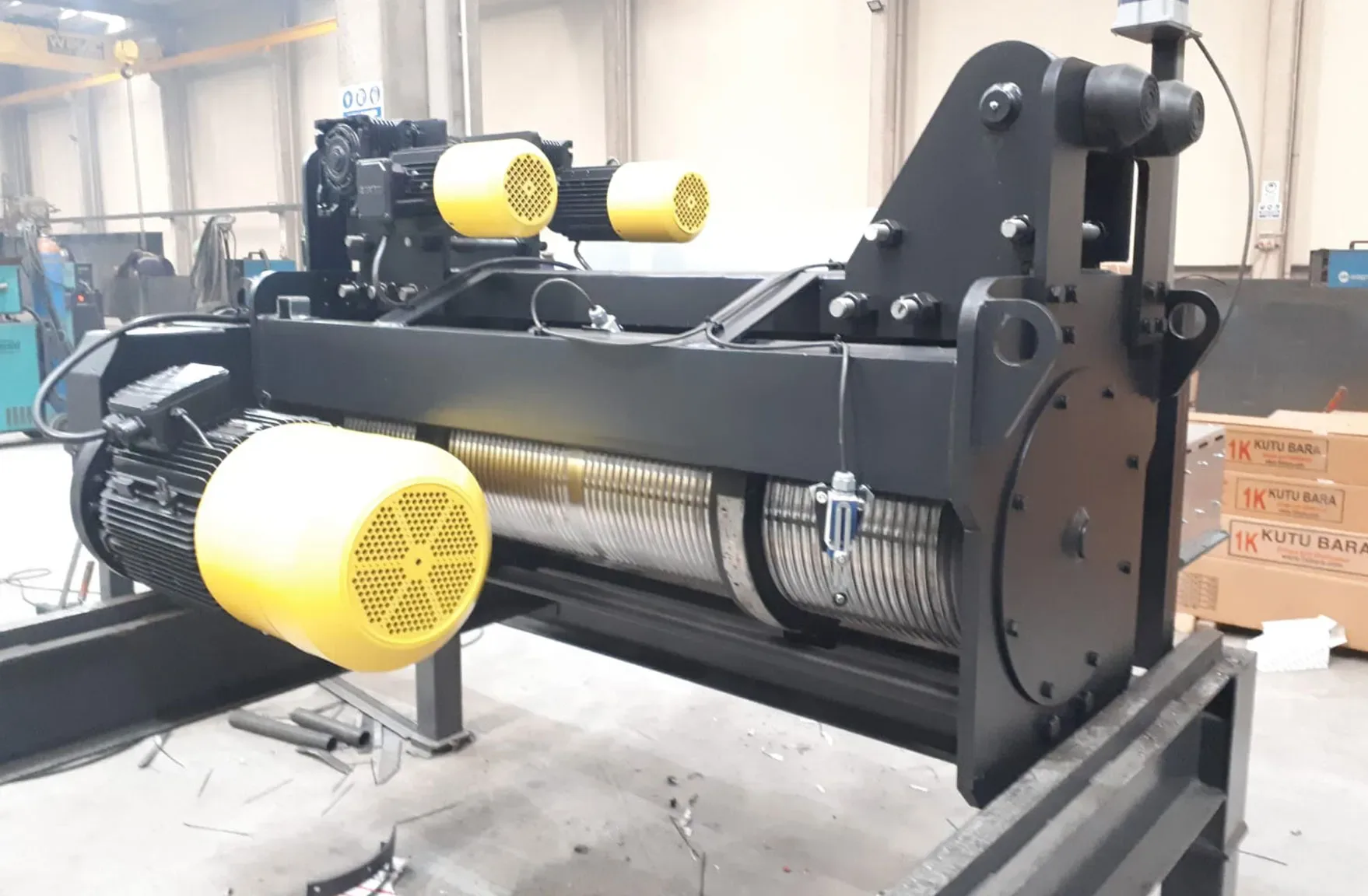
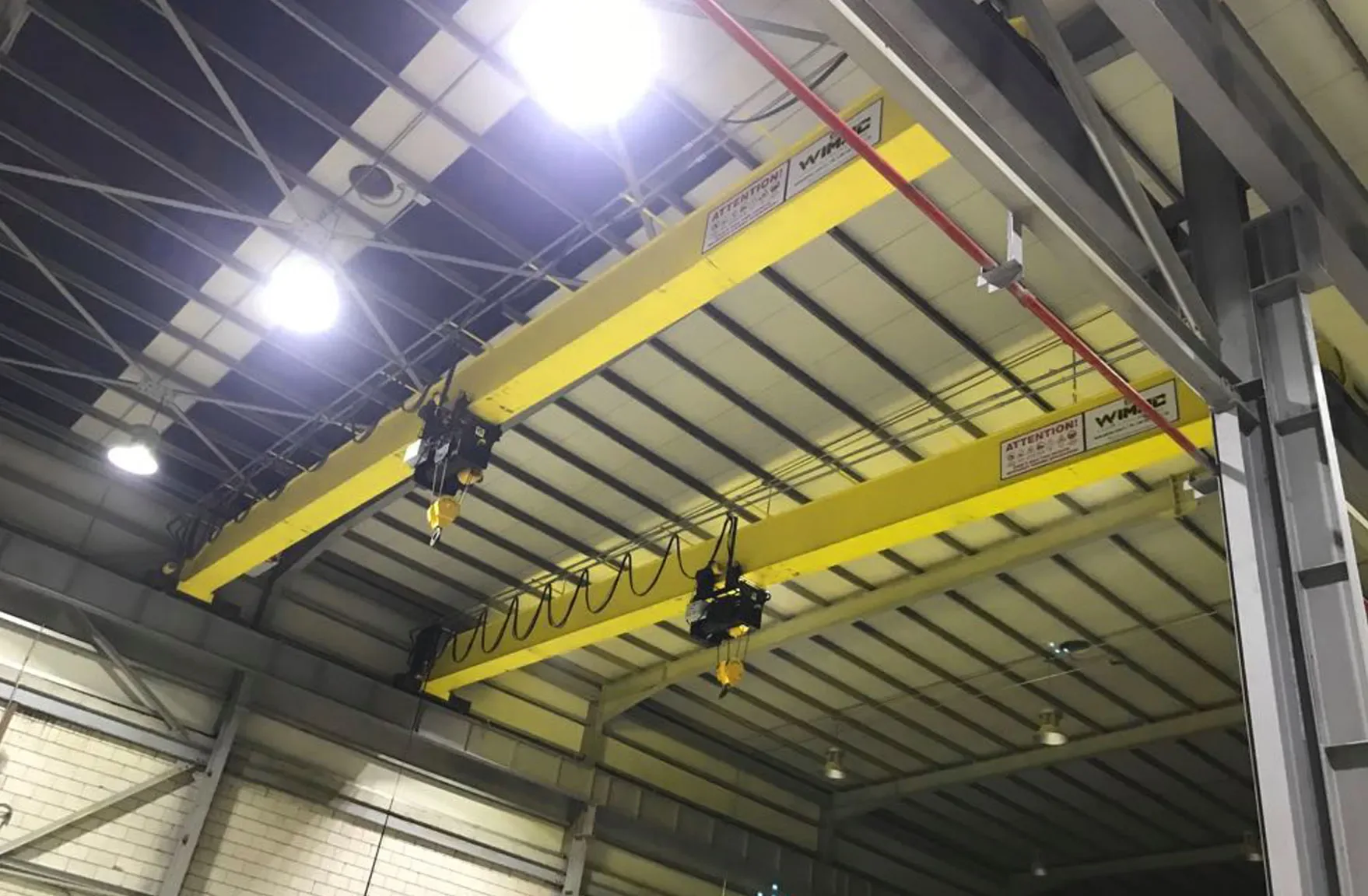
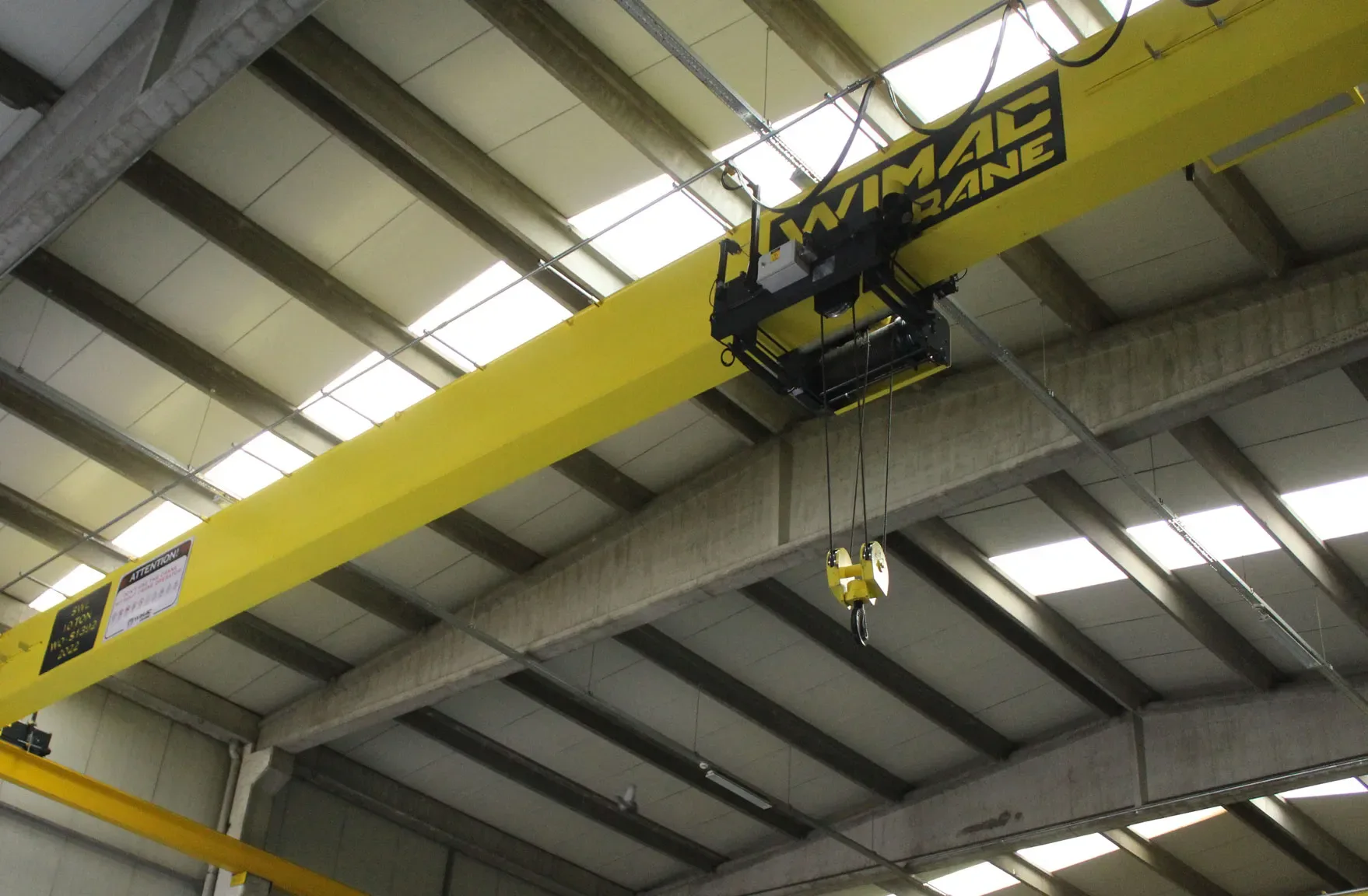
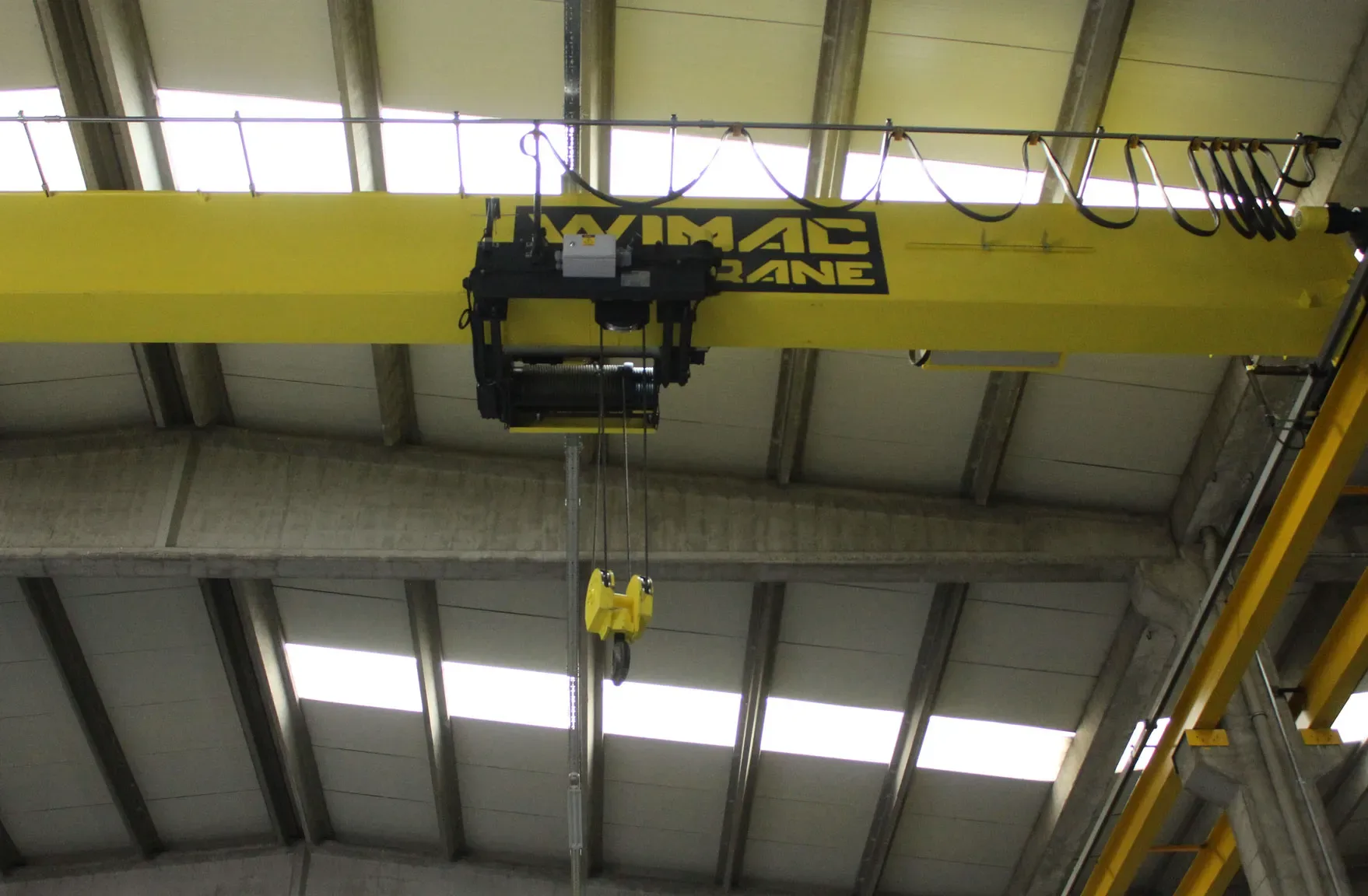
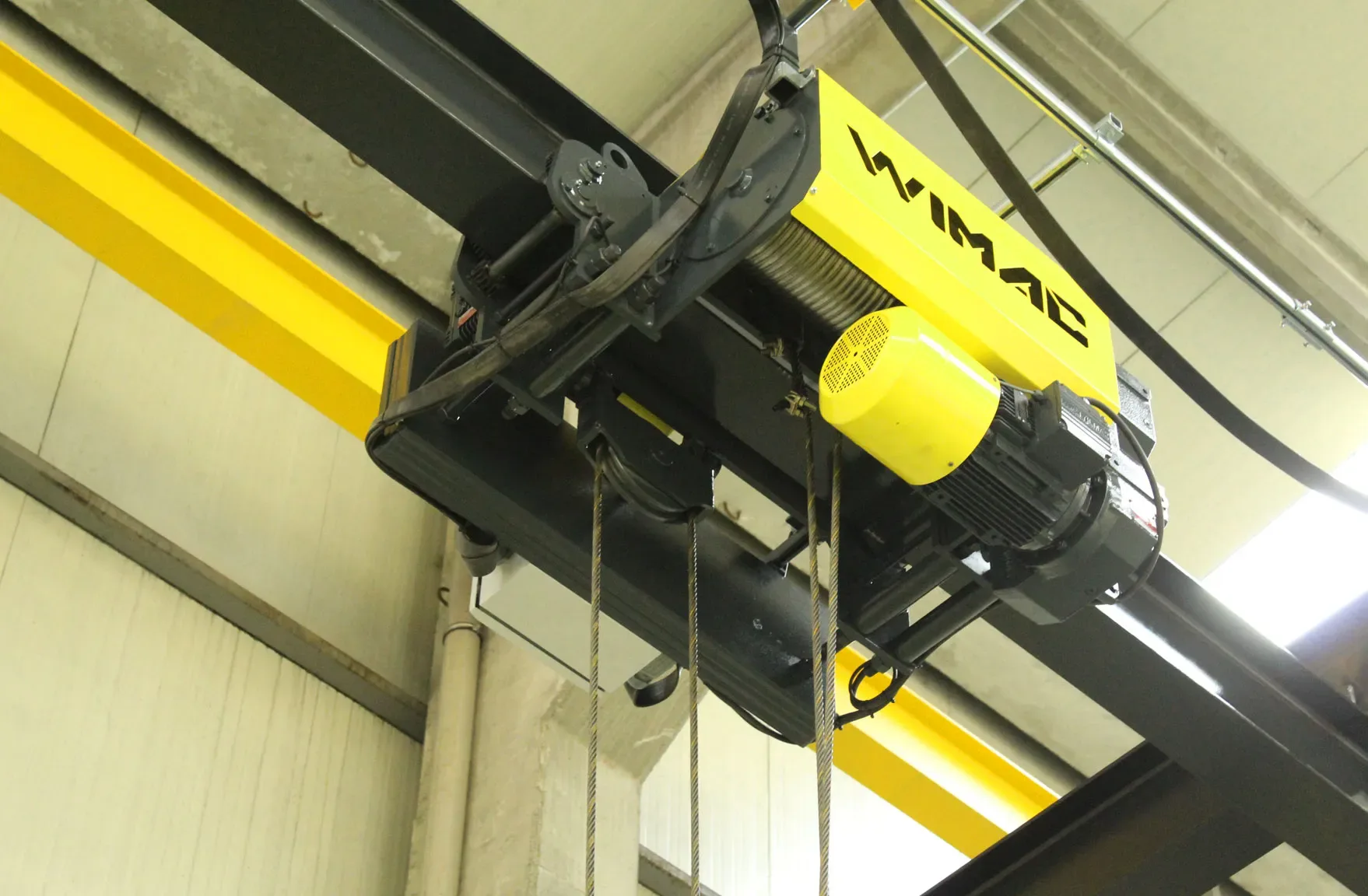
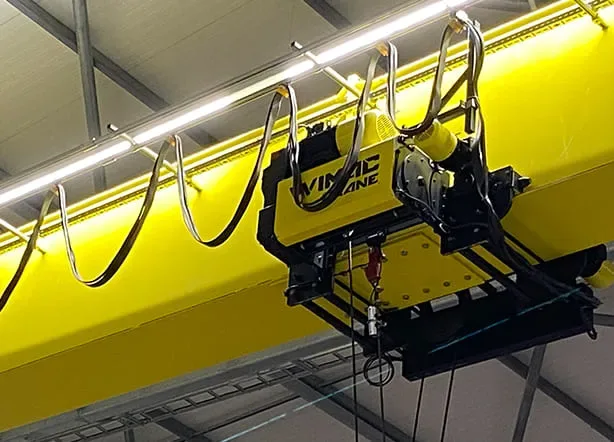
Wimac Crane monorail hoist systems make it simple and safe to move loads along a fixed path. They are manufactured in Konya, Turkey and supplied to factories, warehouses and workshops in Nigeria, from Lagos and Ogun State to Abuja and Port Harcourt. Each system is put together to suit the layout of your working area, and it keeps delivering strong performance under demanding conditions. Regarded as one of the safest crane types, and valued for its high lifting capacity in every kind of working environment, the monorail hoist is in service in many countries.
Every monorail crane we build is designed and used in line with FEM, DIN and ISO norms. The same level of quality, backed by our CE and ISO certificates, applies across the whole Wimac product range.
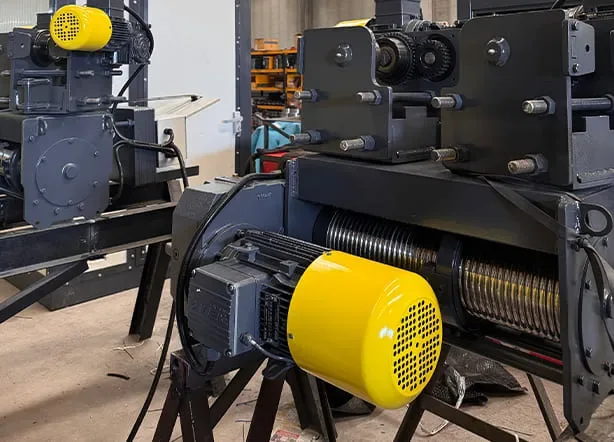
Operation is by remote control. High-quality motors and reducers give soft, controlled starts and stops, so loads move smoothly from the first metre to the last.
No two installations are identical, so each monorail system is designed around the place it will be used. Primer and paint systems are selected for the working conditions, and corrosion protection is applied to international standards — a practical advantage on humid, coastal sites such as those in Lagos and Port Harcourt.
Main Advantages
WO-S Series Technical Data
| Rated Capacity SWL (t) | Serial No. | Drum Dia. (mm) | Wire Rope Dia. (mm) | Hook Size (P Class) | Trolley Self-Weight (kg) | Lift Speed (m/min) | Lifting Motor Rating (kW) | Trolley Wheel Dia. (mm) | Trolley Wheel Bearing Type | Trolley Travel Motor (kW) | End Truck Wheel Dia. (mm) | End Truck Bearing Type | Cross Travel Motor Rating (kW) |
|---|---|---|---|---|---|---|---|---|---|---|---|---|---|
| 1.6 | WO-S16 | 160 | 8 | Nr1 | 550 | 4 | 1.10 | Ø100 | 6205-2RS | 2×0,25 | Ø160-125 | 6308 | 2X0.55 |
| 3.2 | WO-S32 | 160 | 8 | Nr2.5 | 550 | 0,7-3,5 | 2.20 | Ø100 | 6205-2RS | 2×0,25 | Ø160-125 | 6308 | 2X0.55 |
| 5 | WO-S50 | 220 | 10 | Nr4 | 600 | 4 | 4 | Ø130 | 6206-2RS | 2×0,37 | Ø200-170 | 6310 | 2x0.55 |
| 6.3 | WO-S63 | 220 | 12 | Nr4 | 750 | 4.3 | 5.5 | Ø160 | 6207-2RS | 2×0,37 | Ø200-170 | 6310 | 2x0.75 |
| 8 | WO-S80 | 270 | 14 | Nr5 | 800 | 3.5 | 5.5 | Ø160 | 6207-2RS | 2×0,55 | Ø200-170 | 6310 | 2X0.75 |
| 10 | WO-S100 | 270 | 14 | Nr6 | 1000 | 3.5 | 7.5 | Ø160 | 6207-2RS | 2×0,55 | Ø240-200 | 22210 | 2x11 |
| 12.5 | WO-S125 | 360 | 16 | Nr8 | 1250 | 4.1 | 11.0 | Ø200 | 6209-2RS | 2×0,75 | Ø240-200 | 22210 | 2x11 |
| 16 | WO-S160 | 360 | 18 | Nr10 | 1500 | 3.5 | 11.0 | Ø300 | 6213-2RS | 2×0,75 | Ø300-250 | 22212 | 2x15 |
| 20 | WO-S200 | 400 | 20 | Nr12 | 1750 | 3.9 | 15.0 | Ø300 | 6213-2RS | 2×1,1 | Ø300-250 | 22212 | 2X2.2 |
All units in this table are designed to the FEM M5 and ISO 2m classification.
Testing and Ordering Notes
- Test loads: 1.25 × SWL static and 1.10 × SWL dynamic
- The models in the table cover lifting heights from 6 m up to 12 m
- Long travel runs at 30 m/min and cross travel at 20 m/min
- Include the module and tooth count in your order. Tooth form follows DIN 867, without profile correction, at a 20 degree pressure angle.
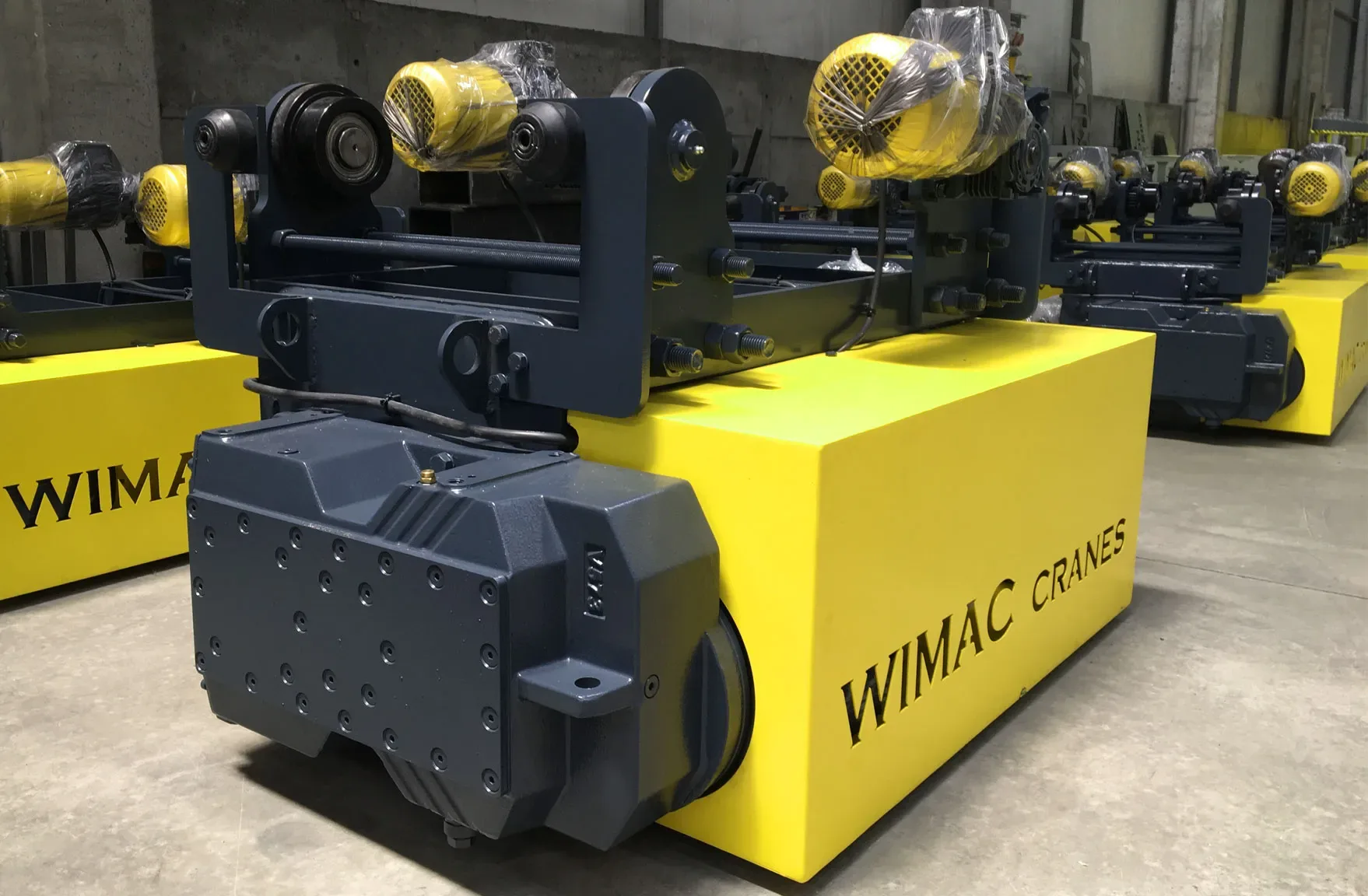
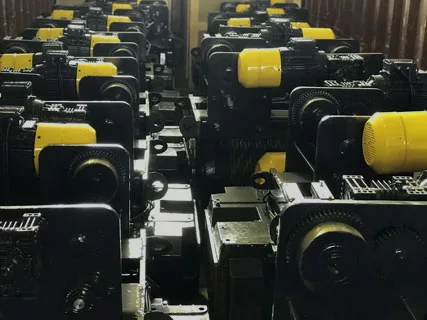
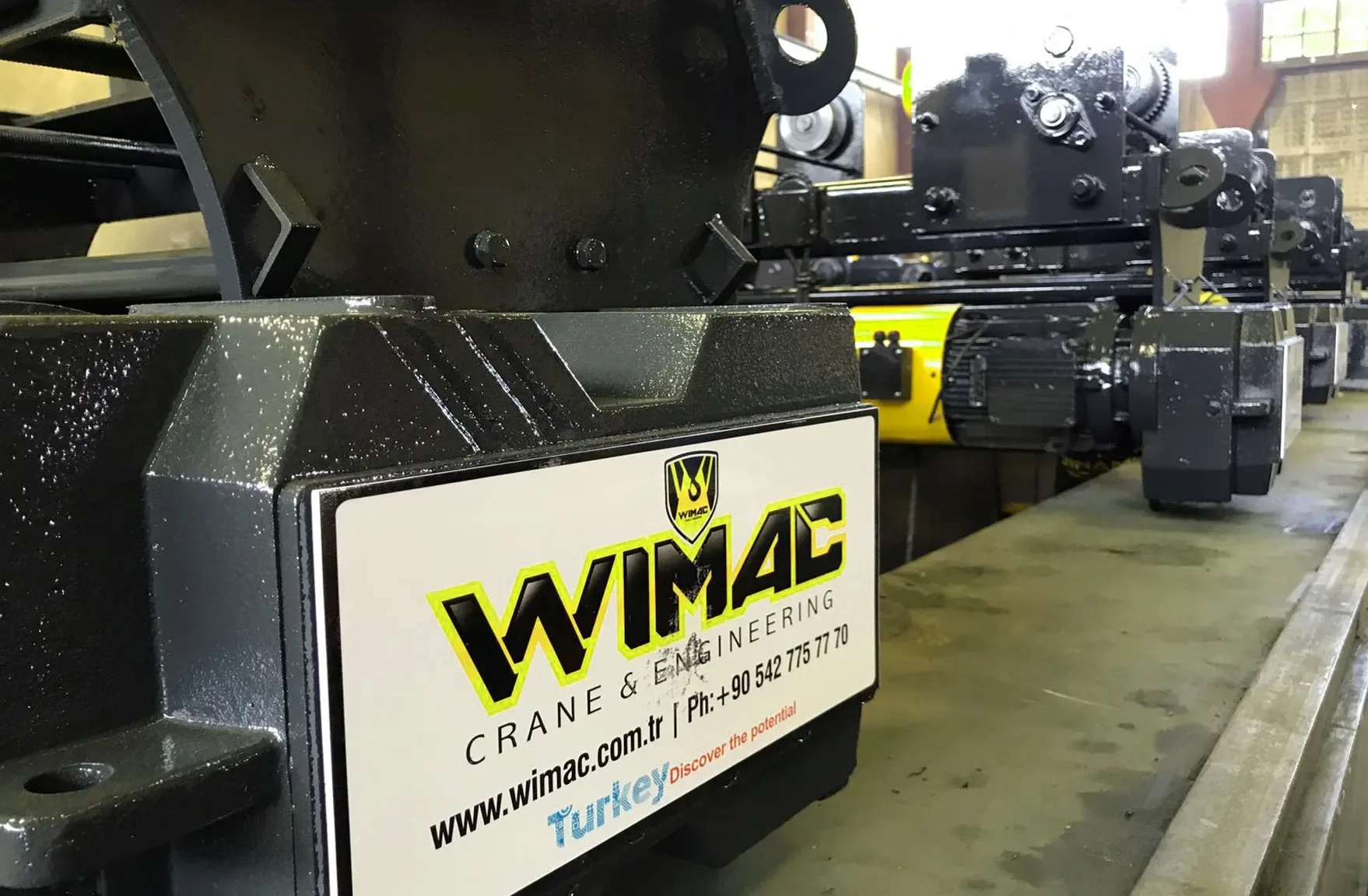
Monorail Hoists for Nigerian Industry
A monorail hoist is one of the most economical ways to move loads along a single line — between production stations, across a loading bay or through a maintenance workshop. In Nigeria it is a common fit for FMCG and food and beverage plants, manufacturing lines, warehousing and logistics centres, fabrication workshops, and the maintenance bays of power stations and oil and gas facilities.
For a quotation, tell us the capacity you need, the lifting height, the runway beam size (or whether a new runway is required), the travel and lifting speeds you are looking for, how often the hoist will run and where your site is located. Our engineers will match a model from the WO-S series to the job.
Monorail Hoist Questions from Nigerian Buyers
What capacities do Wimac standard monorail hoists cover?
The standard monorail hoist table runs from 1.6 to 20 tons SWL, models WO-S16 to WO-S200, with lifting heights between 6 and 12 meters.
Which classification are the monorail hoists designed to?
The models in the table are designed to FEM M5 / ISO 2m with 4/1 rope reeving, and all our monorail cranes are manufactured in line with FEM, DIN and ISO norms.
Should I choose a standard monorail hoist or a low headroom hoist?
A standard monorail hoist hangs directly under the beam, needs no counterweight and is the lighter option. If your building has limited height, a low headroom hoist brings the hook closer to the beam and gives more usable lift.
Are Wimac monorail hoists made in Nigeria?
No. Wimac manufactures its hoists in Konya, Turkey and supplies them to customers in Nigeria. Primer, paint and corrosion protection are chosen to suit the working conditions of each site.
What details should I send for a monorail hoist quotation?
Tell us the capacity, lifting height, runway beam size or whether a new runway is needed, the travel and lifting speeds you require, how often the hoist will run and where your site is in Nigeria.
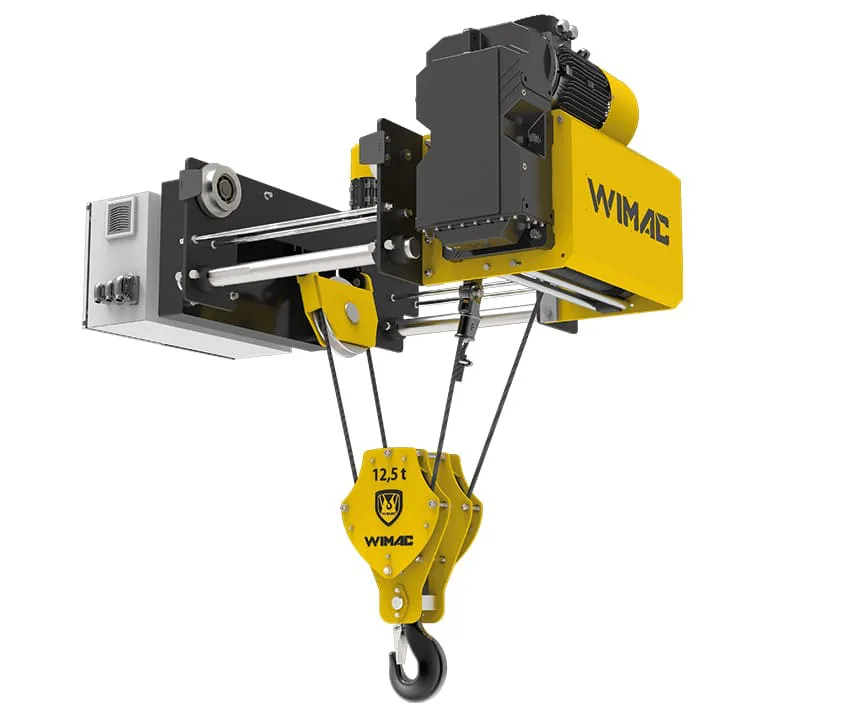
Low Headroom Monorail Hoist: More Lift Under a Low Roof
Low ceilings are common in older factories and warehouses, and that is exactly where the low headroom hoist earns its place. The hook can be raised almost flush with the beam, giving more effective lifting height than a standard hoist while keeping full performance.
Thanks to its offset drum and compact build, it is well suited to retrofit projects and to new facilities where every centimetre of roof height counts. It is offered in capacities from 1.6 to 10 tons.
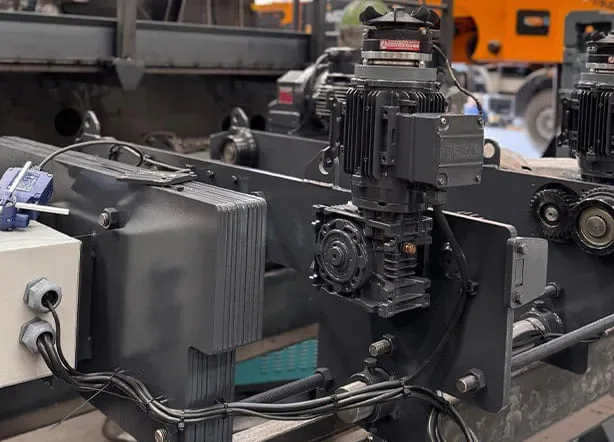
Main Advantages
WU-S Series Technical Data
| Rated Capacity SWL (t) | Serial No. | Drum Dia. (mm) | Wire Rope Dia. (mm) | Hook Size (P Class) | Trolley Self-Weight (kg) | Lift Speed (m/min) | Lifting Motor Rating (kW) | Trolley Wheel Dia. (mm) | Trolley Wheel Bearing Type | Trolley Travel Motor (kW) | End Truck Wheel Dia. (mm) | End Truck Bearing Type | Cross Travel Motor Rating (kW) |
|---|---|---|---|---|---|---|---|---|---|---|---|---|---|
| 1.6 | WU-S 16 | 160 | a8 | Nr1 | 550 | 4 | 1.10 | Ø100 | 6205-2RS | 2 x 0,25 | Ø130 | 6206 | 2x0,55 |
| 3.2 | WU-S 32 | 160 | 8 | Nr2.5 | 550 | 0.7-3.5 | 2.20 | Ø100 | 6205-2RS | 2 x 0,25 | Ø130 | 6206 | 2x0,55 |
| 5 | WU-S 50 | 220 | 10 | Nr4 | 600 | 4 | 4 | Ø130 | 6206-2RS | 2 x 0,37 | Ø160 | 6207 | 2x0,55 |
| 6.3 | WU-S 63 | 220 | 12 | Nr4 | 750 | 4.3 | 5.5 | Ø160 | 6207-2RS | 2 x 0,37 | Ø200 | 6209 | 2x0,75 |
| 8 | WU-S 80 | 270 | 14 | Nr5 | 800 | 3.5 | 5.5 | Ø160 | 6207-2RS | 2 x 0,55 | Ø300 | 6213 | 2x0,75 |
| 10 | WU-S 100 | 270 | 14 | Nr6 | 1000 | 3.5 | 7.5 | Ø160 | 6207-2RS | 2 x 0,55 | Ø300 | 6213 | 2x1,1 |
All units in this table are designed to the FEM M5 and ISO 2m classification.
Testing and Ordering Notes
- Test loads: 1.25 × SWL static and 1.10 × SWL dynamic
- The models in the table cover lifting heights from 6 m up to 12 m
- Long travel runs at 30 m/min and cross travel at 20 m/min
- Include the module and tooth count in your order. Tooth form follows DIN 867, without profile correction, at a 20 degree pressure angle.
ATEX Explosion-Proof Wire Rope Hoists
For hazardous areas, Wimac builds explosion-proof hoists with ATEX certification. Every part is engineered and certified to remove potential ignition sources from zones where explosive gases, vapours or dust may be present.
Compliance with ATEX Directive 2014/34/EU allows the hoists to be used in Zone 1, Zone 2, Zone 21 and Zone 22. Flameproof motor housings, increased safety terminal boxes and intrinsically safe control circuitry make them a reliable fit for oil and gas facilities such as those across the Niger Delta, and for chemical, pharmaceutical and grain handling operations where the hazard is just as real.