


Gantry Crane Storm Brakes for Nigerian Ports and Yards
A Gantry Crane Storm brake is a hydraulic rail clamp that locks a gantry crane firmly to its rail whenever it is parked, during an emergency stop, or when strong wind blows across the site. Hydraulic cylinders drive the clamp down onto the rail head with great force, so the crane cannot creep along the runway. The result is a stable crane, safer surroundings and protection against derailment. Any gantry crane working in the open, where wind load can push the structure along the rails, benefits from one — whether it serves a port terminal in Lagos, a stockyard in Ogun State or a fabrication yard in Port Harcourt. Wimac builds its storm brakes in Konya, Turkey and supplies them to Nigeria fitted to a new crane or as a retrofit.
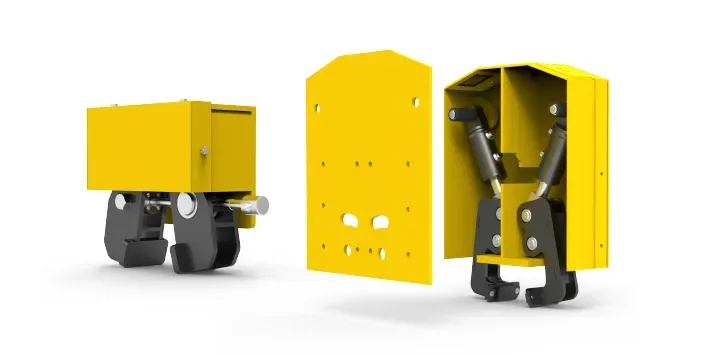
Key Storm Brake Components
- Clamping Mechanism: jaws made from high-strength steel, fitted with friction pads that can be replaced
- Anemometer: tracks wind speed in real time, in m/s or km/h
- Control Interface: linked to the crane PLC so the clamp can operate automatically
Wind Protection for Gantry Cranes in Nigeria
Outdoor gantry and goliath cranes present a large surface to the wind. When a sudden gust or storm front hits an unsecured crane, it can roll along the rails and collide with buffers, other cranes or structures. Ports such as Apapa, Tin Can Island, Lekki Deep Sea Port and Onne, as well as open precast, steel and pipe yards, all face this risk. A storm brake linked to an anemometer and the crane PLC takes the decision out of the operator's hands: the crane is clamped when the wind demands it, protecting people, cargo and the crane itself.
Information to Send for a Storm Brake Quote
- Rail data: rail profile and the condition of the rail head
- Crane data: crane type, span, height and maximum wheel load
- End carriage: drawings or photos showing where the clamp can be mounted
- Controls: the existing PLC or control panel, for retrofit projects
Storm Brake Questions and Answers
What does a gantry crane storm brake do?
A storm brake is a hydraulic rail clamp. Hydraulic cylinders press steel jaws onto the rail head so the crane cannot roll along the runway in strong wind, during an emergency stop or while it is parked. This keeps the crane stable and protects it against derailment.
How does the storm brake know when the wind is too strong?
An anemometer measures wind speed continuously in m/s or km/h. Because the storm brake is integrated with the crane PLC, the clamping sequence can be triggered automatically when the measured wind speed requires it.
Can storm brakes be retrofitted to an existing gantry crane in Nigeria?
Yes. Wimac supplies storm brakes with new gantry cranes and also as a retrofit component for cranes already in service. To size a retrofit we need the rail profile, the wheel load, the crane dimensions and details of the existing end carriage and control system.
Which parts of a storm brake need regular attention?
The jaws are made of high-strength steel with replaceable friction pads, so the pads are the main wear part. Checking pad condition, the hydraulic system and the anemometer signal as part of routine crane inspections helps ensure the clamp holds when it is needed.